


 Listen Live
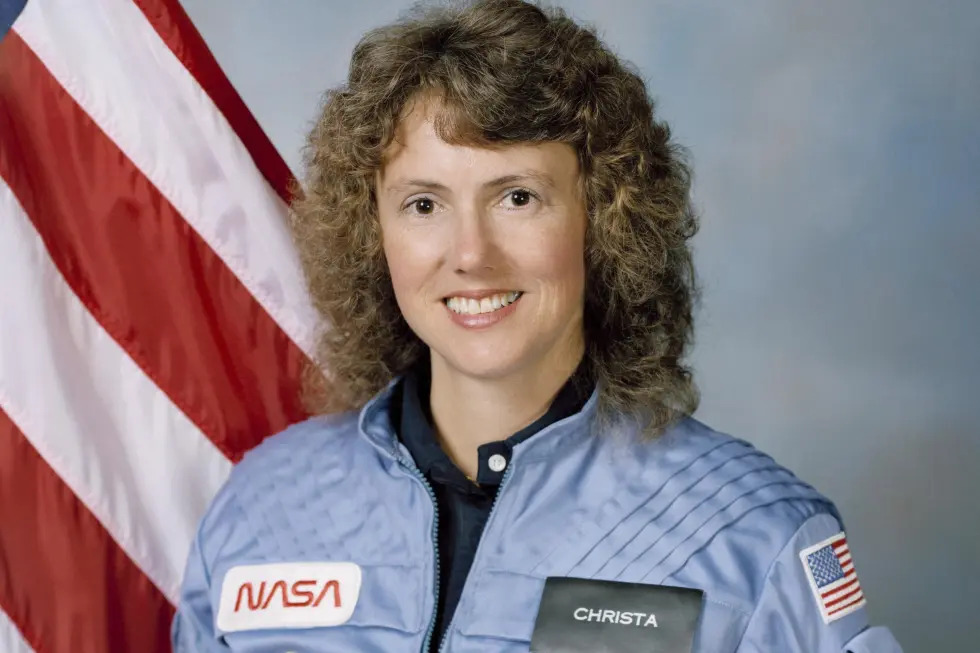

KEENE, N.H. (MyKeeneNow) Forty years after the Space Shuttle Challenger broke apart just 73 seconds after liftoff, killing all seven crew members including New Hampshire teacher Christa McAuliffe, the tragedy remains frozen in time for John Benedict of Keene.
Benedict was a sophomore at Concord High School in January 1986 and had McAuliffe as his social studies teacher the year before she became the nation’s first civilian selected for spaceflight. While the anniversary is marked nationally with ceremonies and documentaries, Benedict’s memories offer a deeply personal reminder of who McAuliffe was long before she became a symbol.
“She wasn’t just a great teacher — she loved teaching,” Benedict said. “I don’t know anyone who didn’t like her.”
McAuliffe taught economics, American culture, American foreign policy and other subjects, recalled Benedict, who remembers her as a proactive and engaged educator who treated students like thinkers rather than spectators.
“She taught us critical thinking,” he said. “That matters even more now, when you’re bombarded with rhetoric and propaganda. She taught us to step back and ask: Is this real? Is this happening? Is there something I can do?”
McAuliffe also organized a Youth in Government trip to Washington, D.C., and supervised a full-year student teacher from the University of New Hampshire — an uncommon arrangement at the time. Benedict said the experience gave students insight not just into the subject matter, but into the craft of teaching itself.
“You got to see her in an odbservational role, not just standing at the front of the room,” he said. “She took it seriously.”
Benedict recalls smaller moments that humanized her, such as when he volunteered to type up ballots for a school election in the history department office next to her classroom, and meeting her husband, Steven McAuliffe, and their two young children when they stopped by the school one afternoon.
Those memories stand in stark contrast to Jan. 28, 1986 — a day Benedict describes as already emotionally fraught. Just weeks earlier, Concord High School had experienced a fatal school shooting, leaving students shaken and grieving.
“It felt like we hadn’t really dealt with that,” he said. “And then we were all supposed to put on a happy face and celebrate this space launch.”
The Challenger launch had already been delayed twice. By the third attempt, Benedict said, excitement had given way to unease.
“It was bitterly cold,” he said. “I remember thinking that wasn’t good.”
Students were gathered across the school to watch the launch live. Benedict was in the school’s media center when the shuttle exploded.
“There was just silence,” he said. “Everyone was staring at the TV, watching debris fall from the sky.”
Friends rushed in from other parts of the building. Adults cried openly. Media descended on the school within minutes, pushing microphones toward stunned teenagers. By early afternoon, students were sent home on buses as national attention focused on Concord.
“I can’t tell you how many adults I saw crying,” Benedict said. “You don’t usually see that as a kid.”
McAuliffe, 37, was one of seven crew members killed in the disaster, along with commander Dick Scobee, pilot Michael Smith and mission specialists Ronald McNair, Ellison Onizuka, Judith Resnik and Gregory Jarvis. She was selected from more than 11,000 applicants for NASA’s Teacher in Space Project and planned to teach lessons from orbit to classrooms across the country.
Those lessons were never delivered as intended, but her influence endured. In New Hampshire, her legacy lives on through the McAuliffe-Shepard Discovery Center in Concord, dozens of schools named in her honor worldwide, and a commemorative U.S. coin bearing her words: “I touch the future. I teach.”
For Benedict, the anniversary is less about spaceflight than about the teacher he knew.
“She’s been elevated to this almost perfect figure over time,” he said. “And sure, nobody’s perfect. But she really was something special.”
Even four decades later, he finds her story resurfacing unexpectedly — in documentaries, news coverage, and conversations with strangers who ask the same question when they learn where he went to high school.
“‘Did you know Christa McAuliffe?’” he said. “Yeah. I did.”
And, he added, the most lasting tribute isn’t found in statues or memorials, but in classrooms, where she focused on teaching, on students and on learning how to think.