


 Listen Live
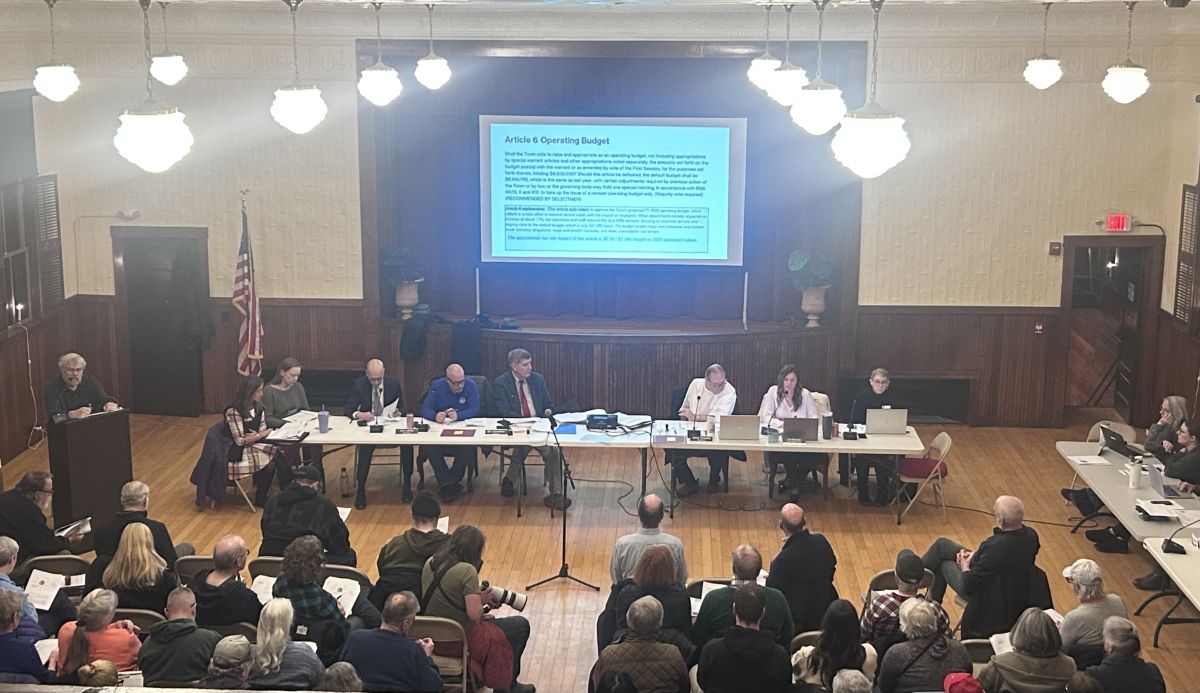

SWANZEY, N.H. (MyKeeneNow) Residents gathered Tuesday night at Whitcomb Hall for Swanzey’s annual deliberative session, weighing a wide-ranging slate of warrant articles that will go before voters at the March town election.
Roughly 90 residents attended the meeting, where all warrant articles were approved to move forward to the ballot, with several amendments made along the way. No final votes were taken, but decisions reached during the session will shape how questions appear when voters cast ballots on March 10.
Budget and Public Works Building Draw Extended Discussion
Much of the evening focused on the town’s proposed operating budget and a plan to construct a new public works facility on Pine Street.
Town officials presented the proposed $8.94 million operating budget, a roughly 6.8 percent increase over the prior year. The default budget is slightly lower but still reflects rising costs driven by wages, health insurance, property and liability insurance, and a significant increase in the town’s ambulance service contract. Officials said departments had reduced requests where possible and used trust fund money to help offset some increases.
Residents raised concerns about rising property taxes and questioned whether large capital projects should be delayed. Select board members and town staff emphasized that many costs are unavoidable and driven by inflation and labor markets and stressed the importance of long-term planning to avoid larger financial impacts in the future.
The proposed $1.2 million public works building drew detailed discussion. The plan calls for a 12,000-square-foot manufactured steel facility, funded with $150,000 from the Public Works Facility Expendable Trust Fund and $1.05 million through bonding, subject to voter approval.
Officials described serious deficiencies in the current facility, including overcrowding, deteriorating conditions, safety hazards, and non-compliance with ADA and workplace standards. Much of the town’s roughly $1 million in equipment is stored outdoors, which officials said shortens equipment lifespan, increases maintenance costs, and creates safety risks for employees—particularly during winter storms.
Supporters argued the project is a necessary investment in public safety and efficiency, while one resident questioned tax impacts, corrosion concerns from indoor storage, and whether the project had been competitively bid. Officials responded that equipment is routinely washed to prevent corrosion and that costs were evaluated through manufacturers and contractors, though formal bidding has not yet occurred. An open house is planned to allow residents to view current conditions before the vote.
Capital Reserves and Long-Term Planning
Voters also reviewed several articles related to capital reserve and expendable trust funds. Officials emphasized the goal of planning ahead for known future expenses, reducing reliance on emergency spending, and stabilizing the tax rate over time.
Funding discussions included preparations for mandatory property revaluations, expected to cost about $120,000 by 2029, and a proposed $200,000 allocation toward future Town Hall improvements. Officials stressed that the Town Hall funding is a placeholder for long-term planning rather than an immediate construction project, though some residents questioned the timing and lack of finalized plans.
An amendment clarified that the Mount Caesar Union Library fund is an expendable trust rather than a capital reserve fund. Another proposed amendment that didn’t receive approval increased one historic building capital reserve appropriation from $7,500 to $10,000.
SB 2 Repeal Advances After Lengthy Debate
The longest and most contentious discussion centered on an article proposing to repeal Swanzey’s SB 2 form of town meeting and return to a traditional in-person town meeting format.
Supporters argued that SB 2 can lead to poorly informed voting on complex issues, saying floor discussion allows for better understanding and amendments before decisions are made. Several speakers emphasized that informed participation is more important than turnout numbers and suggested that Saturday meetings, childcare, and better outreach could improve accessibility.
Opponents raised concerns about fairness and access, particularly for residents who cannot spend long hours at meetings. After extended public comment, the article was approved to move forward to the ballot.
Rail Trail Funding and Christian Hill Road Bridge Stir Emotions
Voters also debated funding for repairs to the Ashuelot Rail Trail, including addressing washouts from 2023. Officials said more than $1.8 million in state and Federal Transportation Alternatives Program funding is available, with a required local match. Supporters warned that rejecting the article could result in lost funding and prolonged trail closures affecting recreation, tourism, and regional connectivity. The article will appear on the ballot as-is.
A separate, highly emotional discussion focused on two petition articles concerning the Christian Hill Road bridge over the rail trail. Some residents urged preservation of the existing bridge, describing it as a historic and visual asset to West Swanzey. Others countered that the bridge is not historically significant, that replacement plans have already undergone extensive review, and that delaying or canceling the project could cost the town $2–2.5 million in grant funding and leave safety issues unresolved.
Officials clarified that no vote was required at the deliberative session, as the petitioned articles concerning the bridge will automatically appear on the ballot.
Tax Relief Articles Advance
The meeting also addressed proposed changes to the town’s elderly property tax exemption, which has not been updated since 2009. Officials proposed increasing income, asset, and property value limits to reflect rising home values and inflation. After confusion over the presentation, the article was tabled briefly and later approved with the understanding that clearer explanatory charts will be included in the voter guide.
An article increasing the optional tax credit for veterans with service-connected total disabilities from $4,000 to $4,500 also passed, ensuring affected veterans do not lose benefits due to changes in state law.