Historic photographs from the Historical Society of Cheshire County’s collection, featured as part of the Monadnock 250 Guide celebrating the nation’s semi-quincentennial in the Monadnock Region of New Hampshire, showcase Keene’s railroad history, downtown development, and industrial growth through the decades.
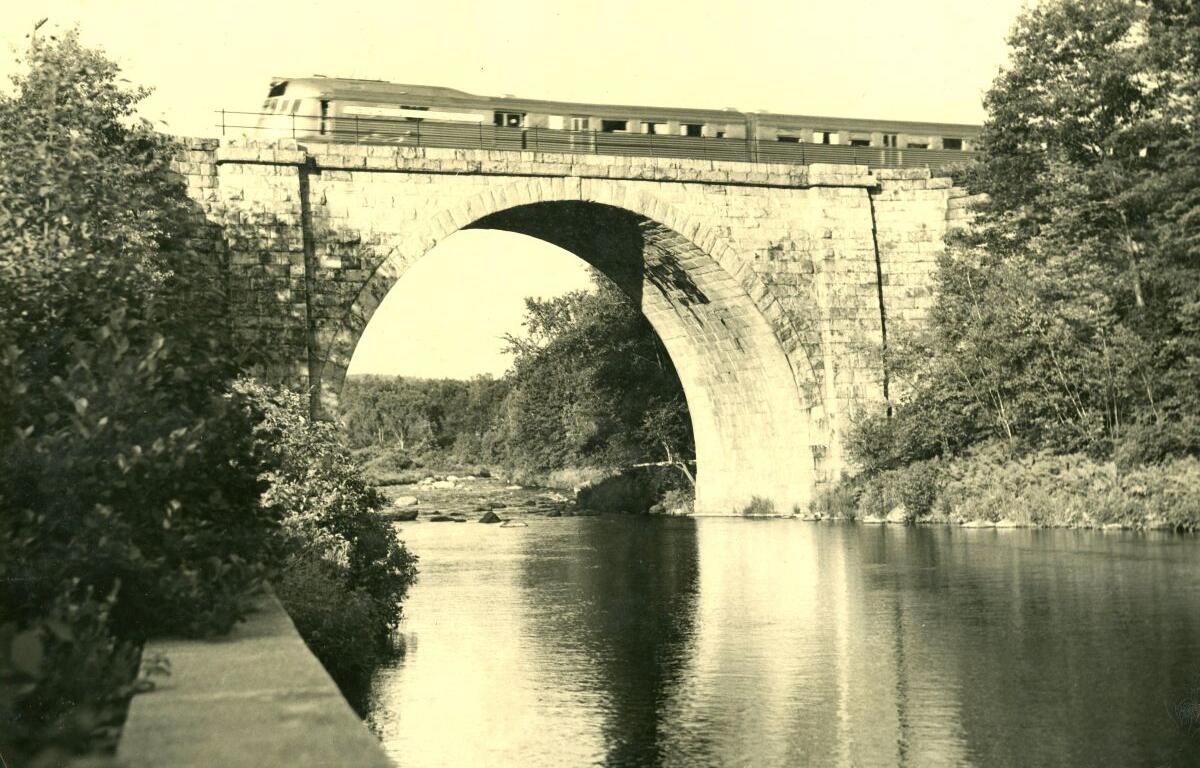
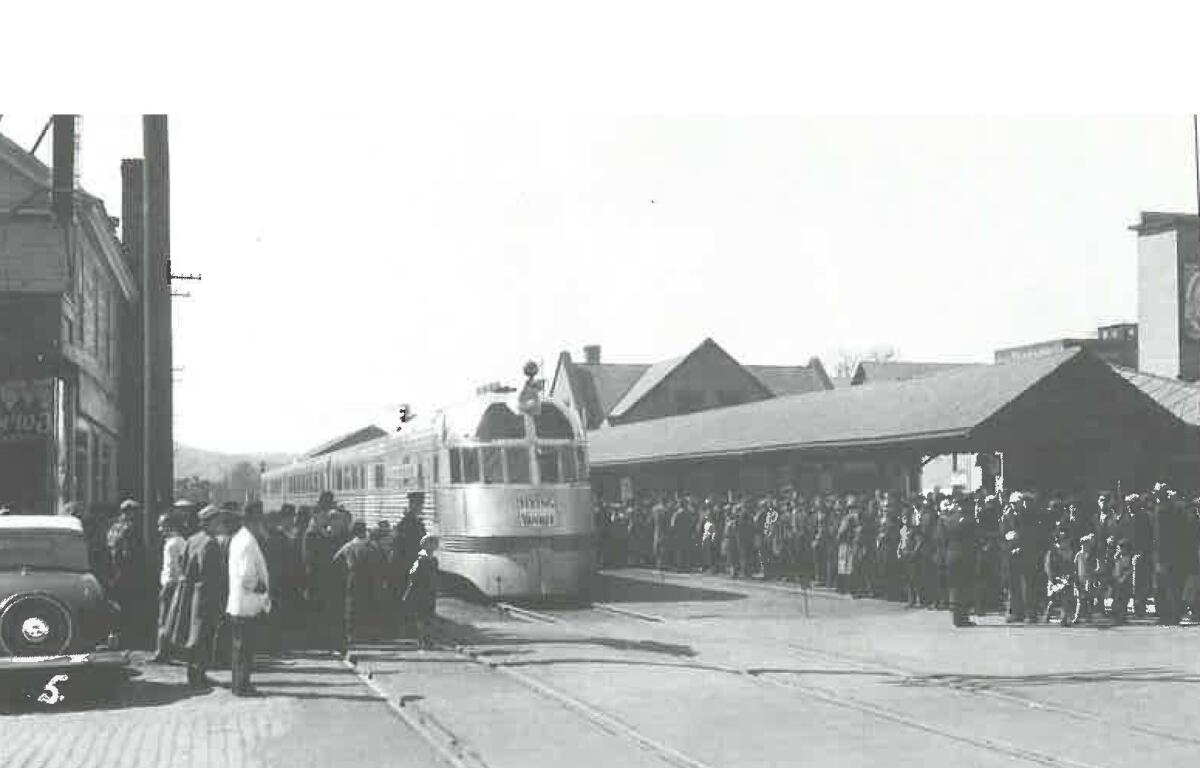
ContributedMarium E. Foster/From the Collection of the Historical Society of Cheshire CountyThe streamline train #6000, running as the westbound "Cheshire," is caught at Joslin drifting into Keene over New Hampshire's largest stone arch bridge./From the Collection of the Historical Society of Cheshire County
Industry and the Railroad
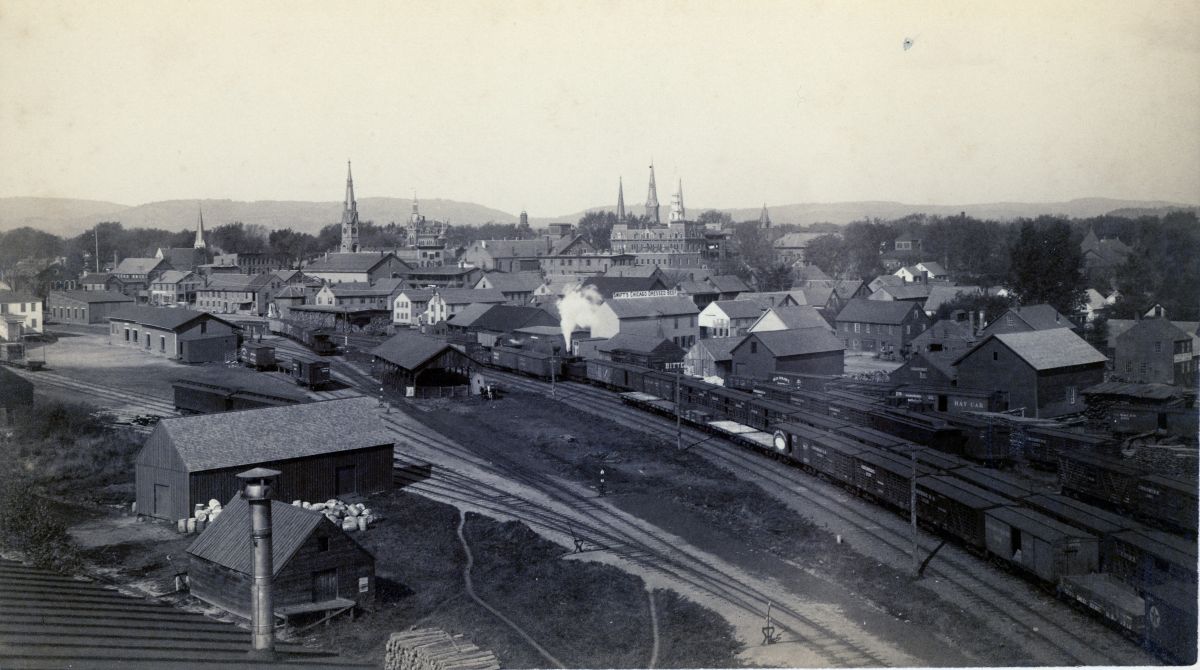
KEENE, N.H. (MyKeeneNow) The arrival of the Cheshire Railroad in 1848 meant steady growth for Keene. Boston markets became accessible for industrial goods. The depot was located on the west side of Main Street where The Corner News is today, the tracks ran across Main Street to the East.
Of the railroad yards, the Roundhouse is all that remains today. A mural painted by Barry Faulkner of the “Opening of the Cheshire Railroad” is on permanent display at the Historical Society of Cheshire County.
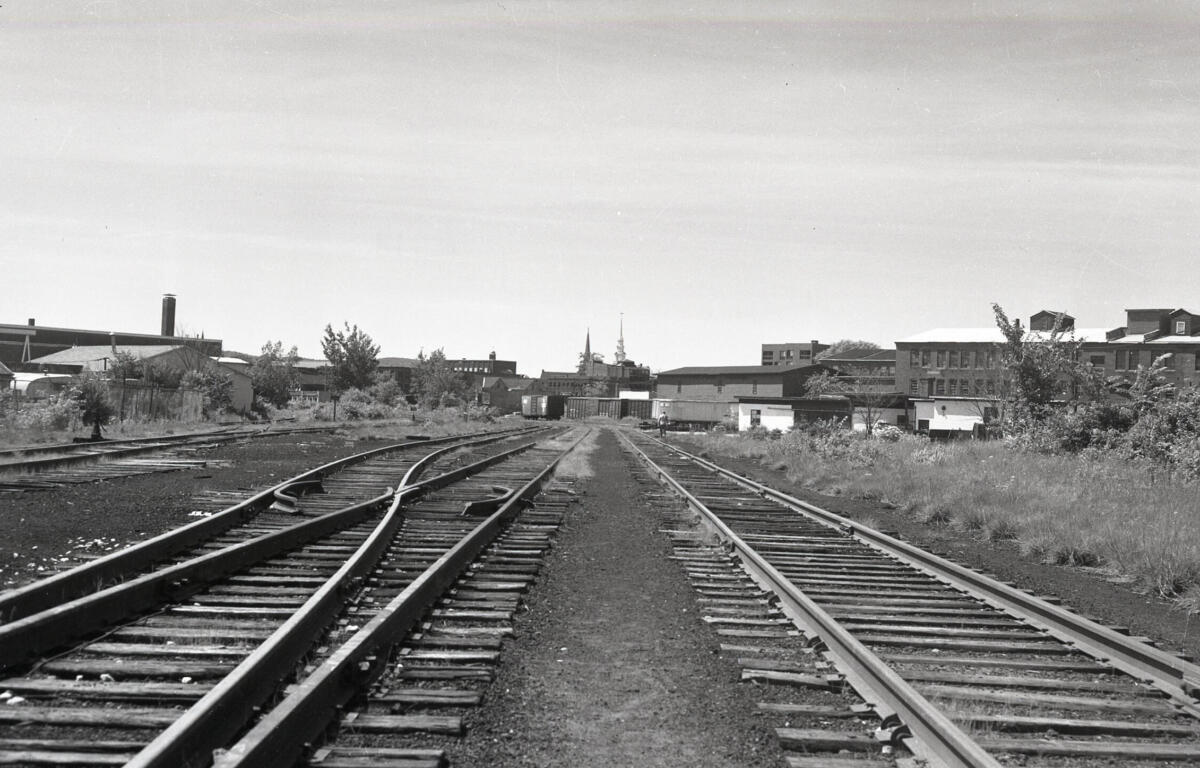
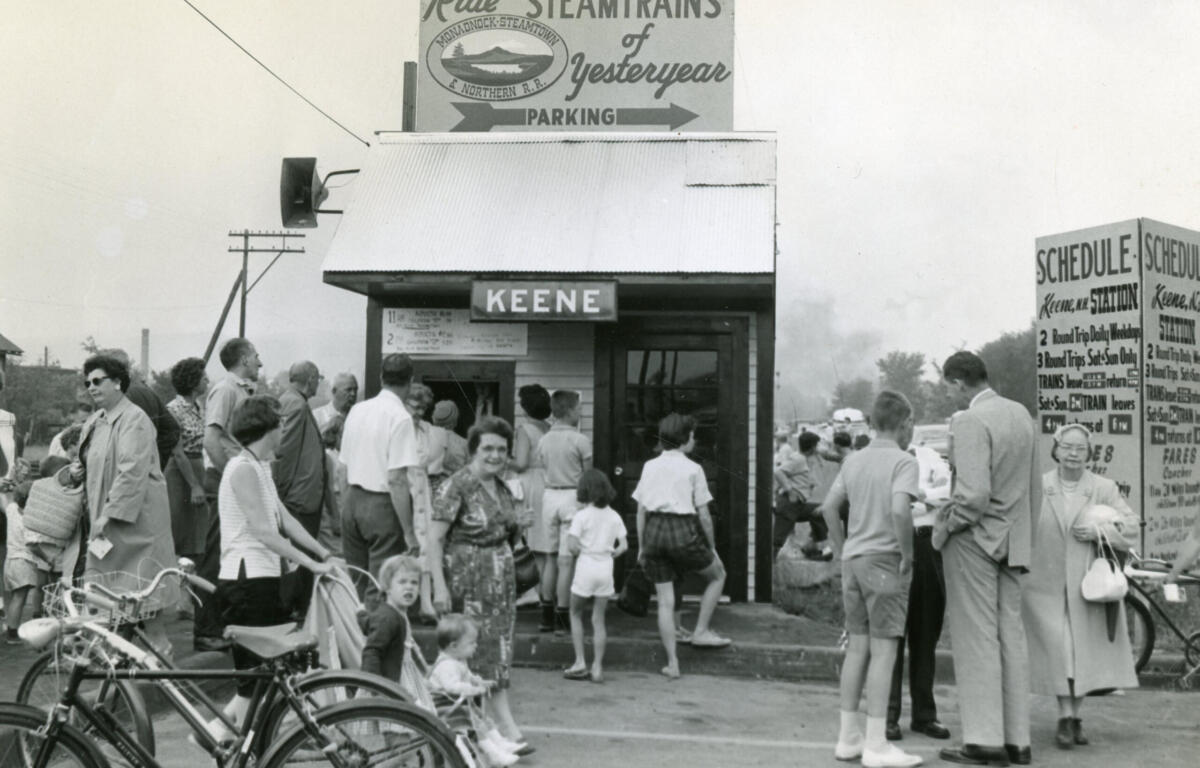
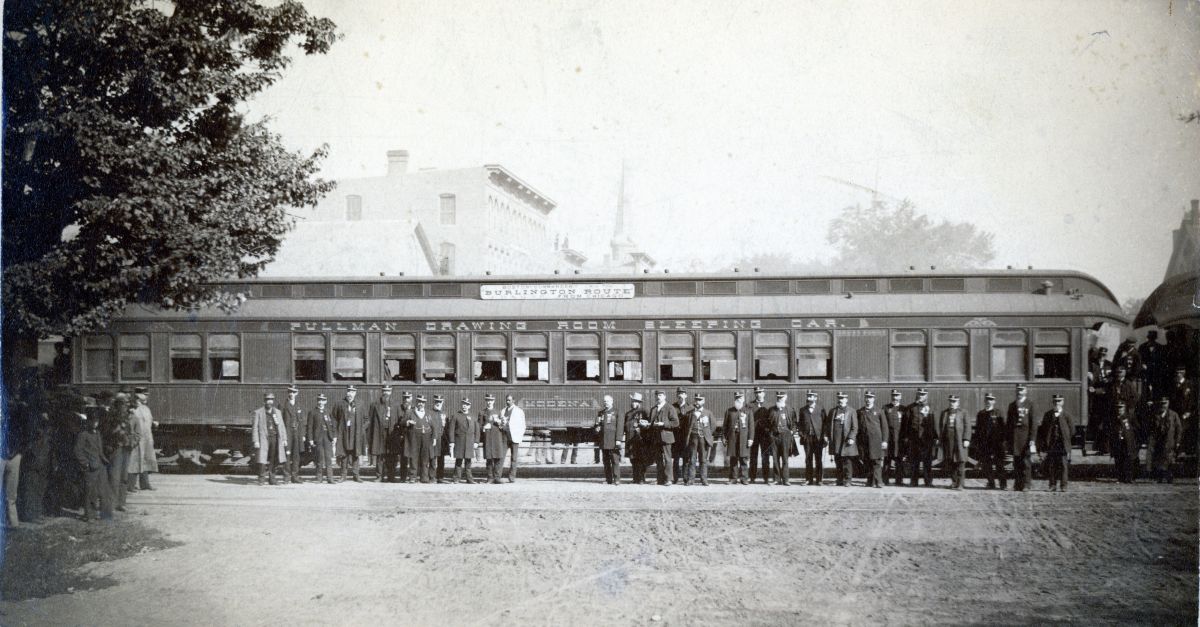
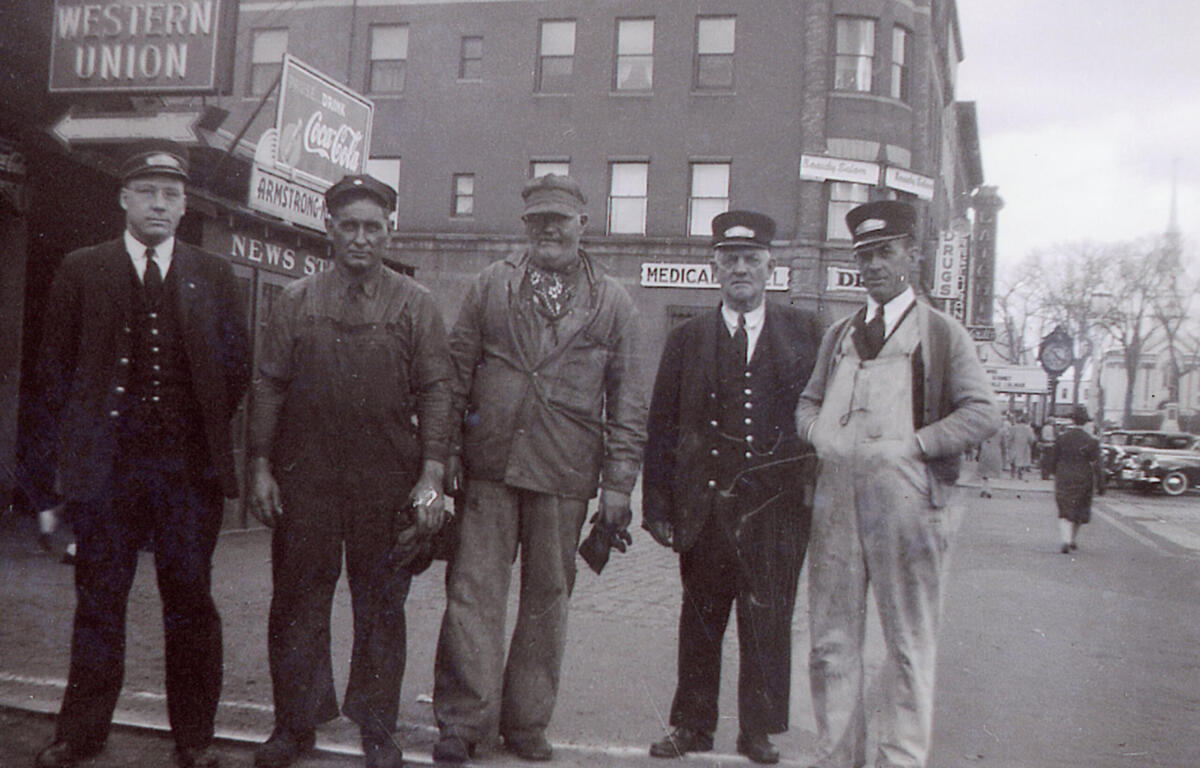
A negative of the railroad tracks leading to Main Street.A photograph of the small ticket kiosk of the Monadnock, Steamtown & Northern Railroad at the site of the former Keene Station on Main Street.A mounted photograph of the “Modena” Pullman drawing room sleeping car, Boston to Chicago via the Burlington route, at Main Street, Keene, NH. The photo shows the members of the Hugh de Payens Commandery no. 7, Knights Templar, off to a convention. September 4, 1883.A mounted photograph of downtown Keene, NH. The photo was probably taken from the roof of the Lancaster Shoe Company on Dunbar Street. The main focus is the railyard of the Cheshire Railroad. Also in view are the Railroad Station (1848-1911), the roundhouse and freight house for the Ashuelot Railroad. In the background are the spires for the St. James Church, Unitarian Church (Church and Main Street), Keene High School (Winter Street), Cheshire County Court House, Methodist Church, First Baptist Church, First Congregational Church, Second Congregational Church and City Hall.A photograph of a crew standing in front of the Armstrong News Stand on Main Street at the railroad station in 1946.
The industries of Keene supported the railroad and in turn the railroad grew the industries. They included: woolen cloth, glass manufacturing, brickmaking, carriage, sleigh and wagon production, woodworking machinery, and chair and furniture production. After the Civil War, chair manufacturing was the most prolific industry, employing several hundred workers and producing a million chairs annually, in particular porch rockers. One of these rockers was later sent to President Kennedy and became known as the Kennedy rocker.
Colony Block
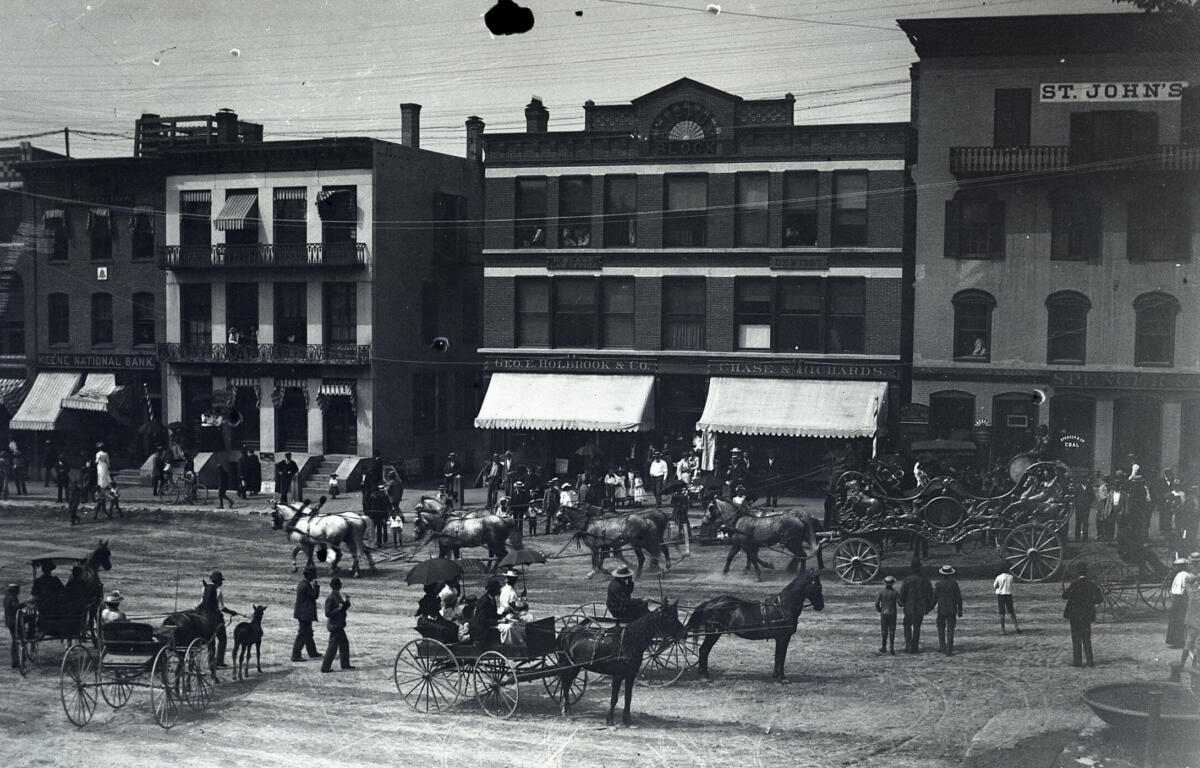
KEENE, N.H. (MyKeeneNow) Colony Block, also known as Colony’s Block, is the most important remaining example of Second Empire architecture in Keene. It is a historic five-story brick building on the east side of Central Square. Brothers Henry and Alfred T. Colony, already wealthy mill owners, bought the block in 1858 and built a small but ornate building. In 1864 they bought the building to the left. Unfortunately, the building and the surrounding ones were destroyed in a fire the following year.
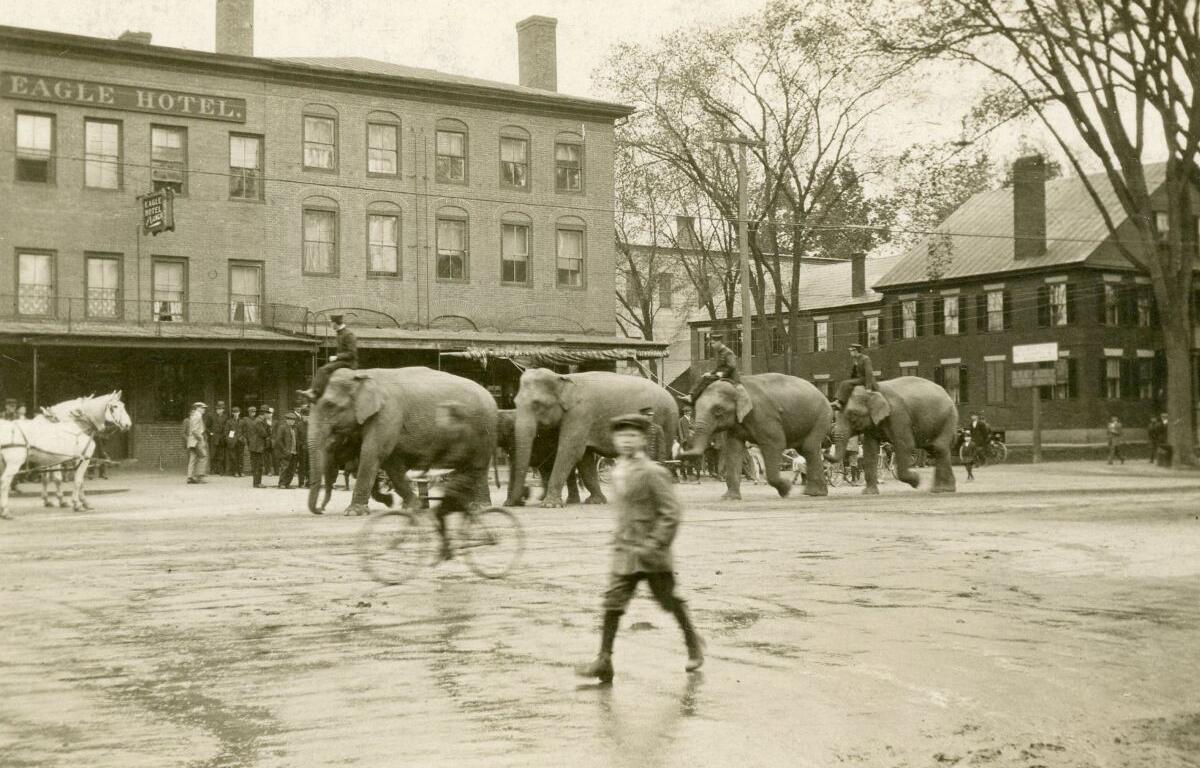
A glass plate negative of people gathered along Main Street watching a circus parade in front of the Colony Block in Keene./From the Collection of the Historical Society of Cheshire County
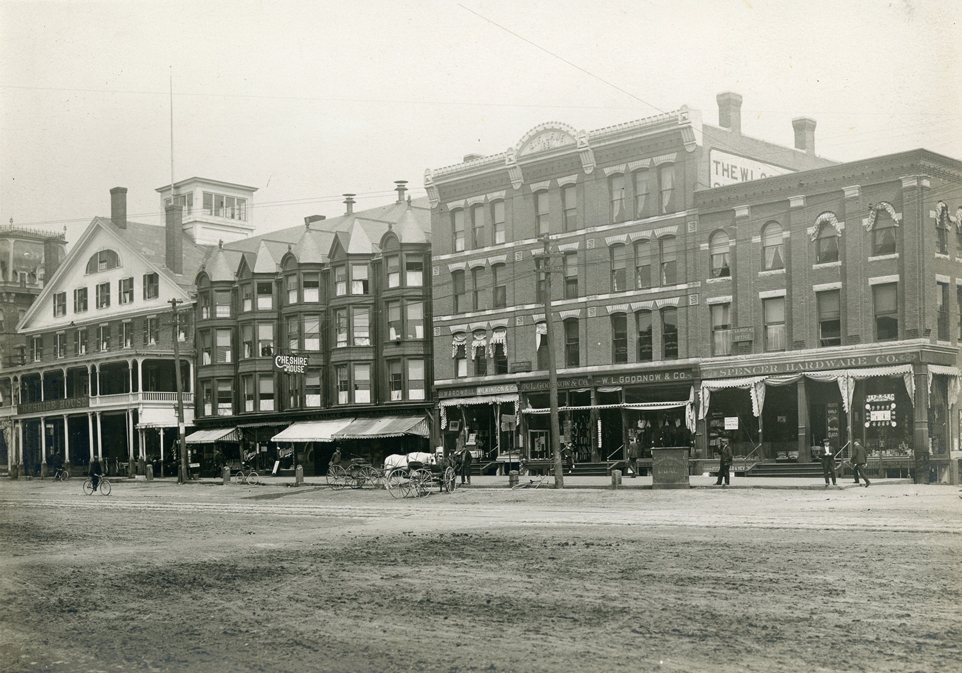
The Colony brothers rebuilt a larger building on the two lots, which was designed by architects E. Boyden & Son, as was the Bank Block to the right. These buildings were finished in 1870, and have remained standing, although undergoing significant changes. Interestingly, the Keene Public Library was a second-floor tenant of the Colony Block from 1870-1877, and in 1898, Henry Colony’s own home was donated (by then-owner Edward C. Thayer) to be the city’s new library building.
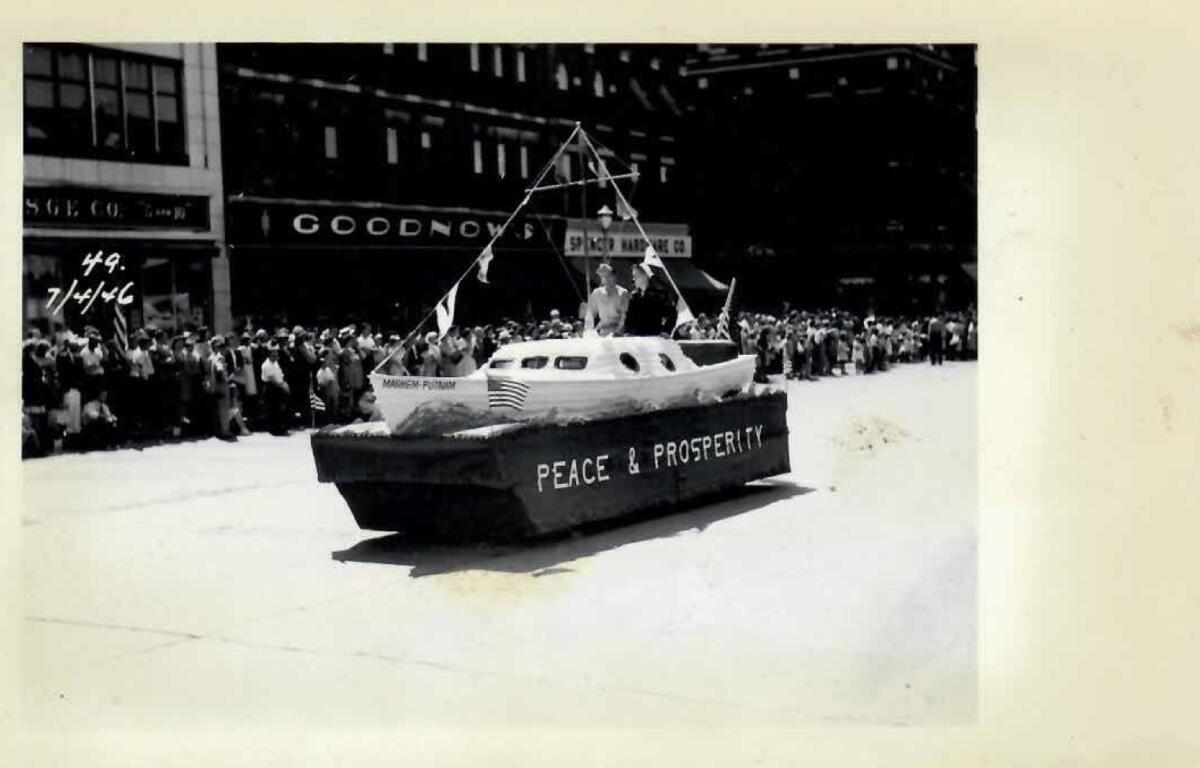
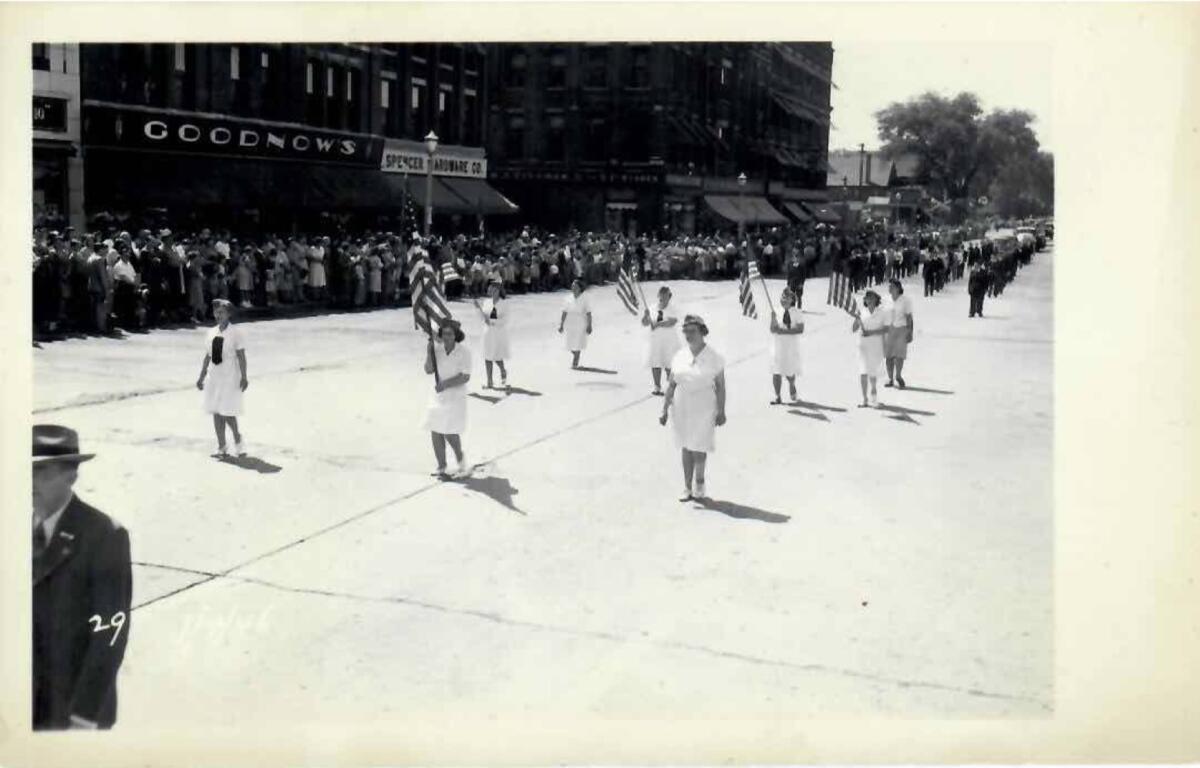
A photograph of the Spencer Hardware Company, W.L. Goodnow, and the Cheshire House in the Colony Block, Main Street.
The Summit Section of the Cheshire Railroad
KEENE, N.H. (MyKeeneNow) The Cheshire Railroad was built 1845 to 1849. The most difficult construction was done by Irish immigrants who labored near the Summit Road for four years. They cut a channel through granite ledges over 20 feet deep and 400 feet long using hand drills, chisels and a few steam powered machines.
Winters were difficult. Riots were frequent. Unscrupulous merchants sold rum by the wagonload in the workers’ camps. The most serious rioting took place near the summit in August 1848 as the result of a quarrel among the laborers, some natives of County Cork and others from Limerick. About 200-armed sons of Cork descended on the shanties of the Limericks and exchanged a variety of missiles and a few volleys of gunfire. The Cork men proved the stronger and drove the Limericks back, taking possession of their homes.
On January 1st, 1849, the railroad opened to Bellows Falls. The difficult terrain of “the narrows” made the line one of the most expensive in New England.
The historic Flying Yankee streamliner, pictured at the train station on Gilbo Avenue in Keene, was built in 1935 for the Boston and Maine Railroad and was among the first streamliner trains in North America. The diesel-electric train, which ended passenger service in 1957, is now owned by the Flying Yankee Association and was added to the New Hampshire State Register of Historic Places in 2025.
Downtown Keene: Through the Years
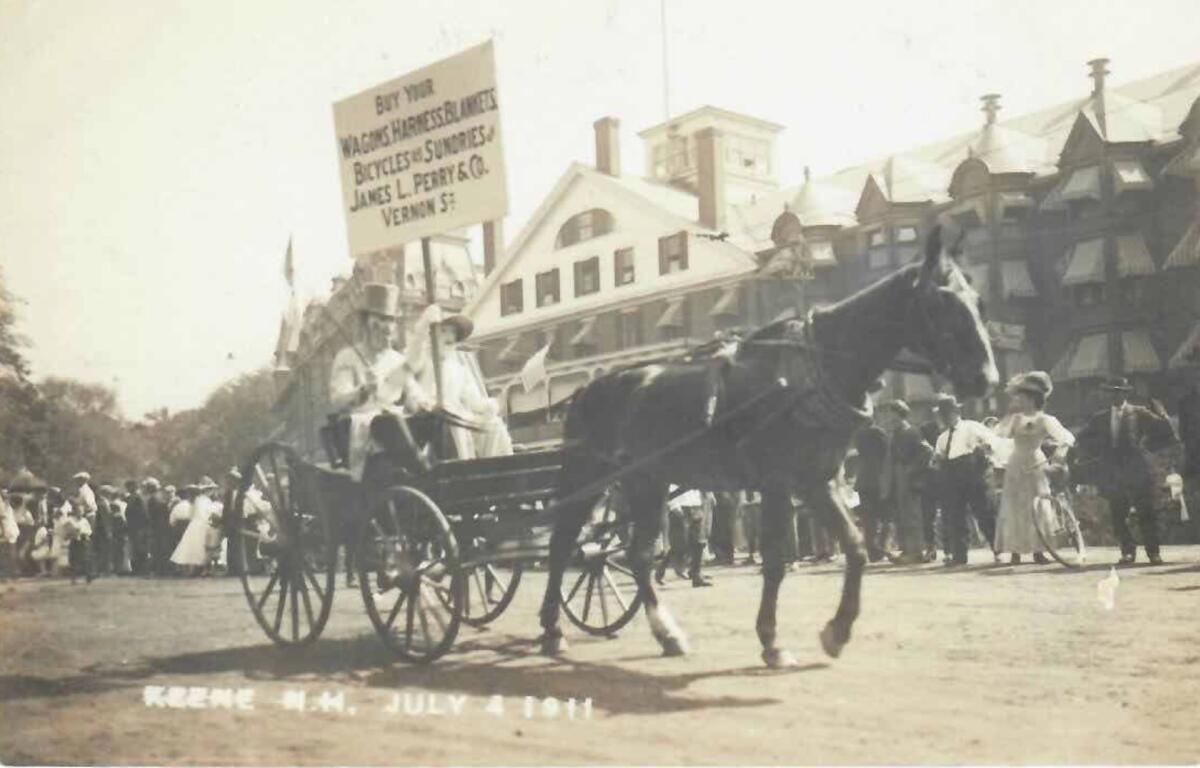
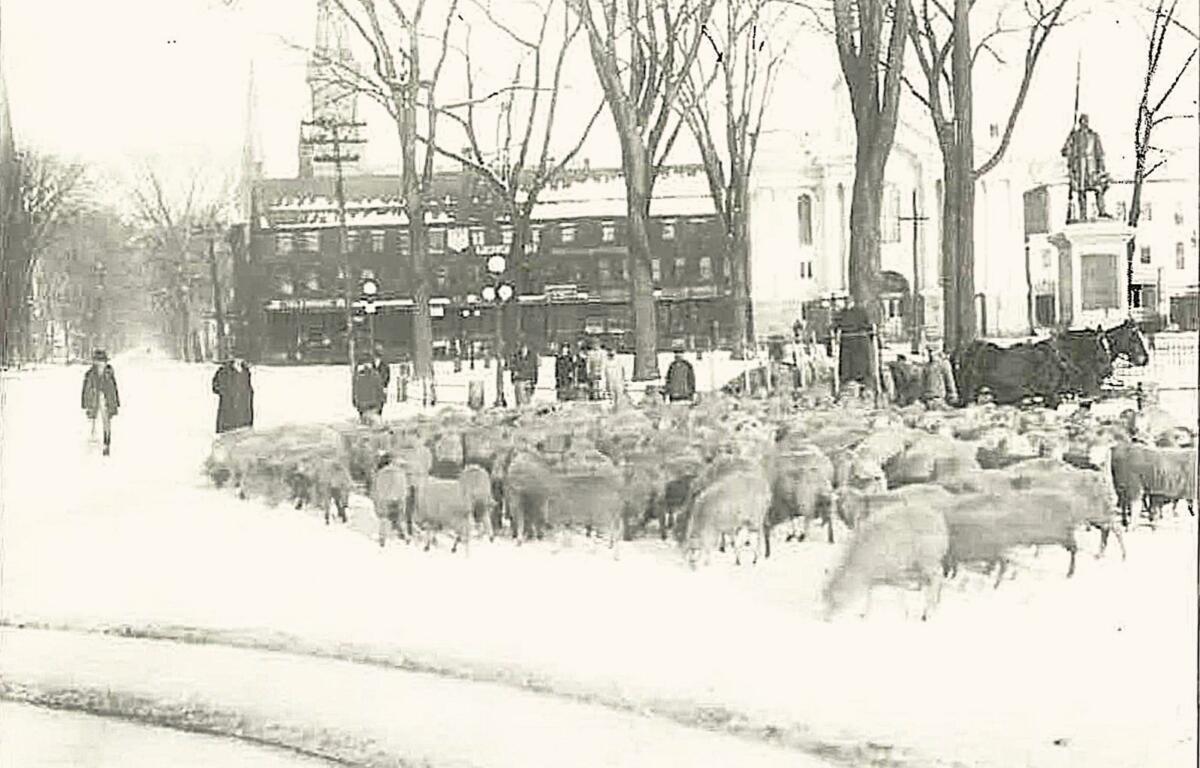
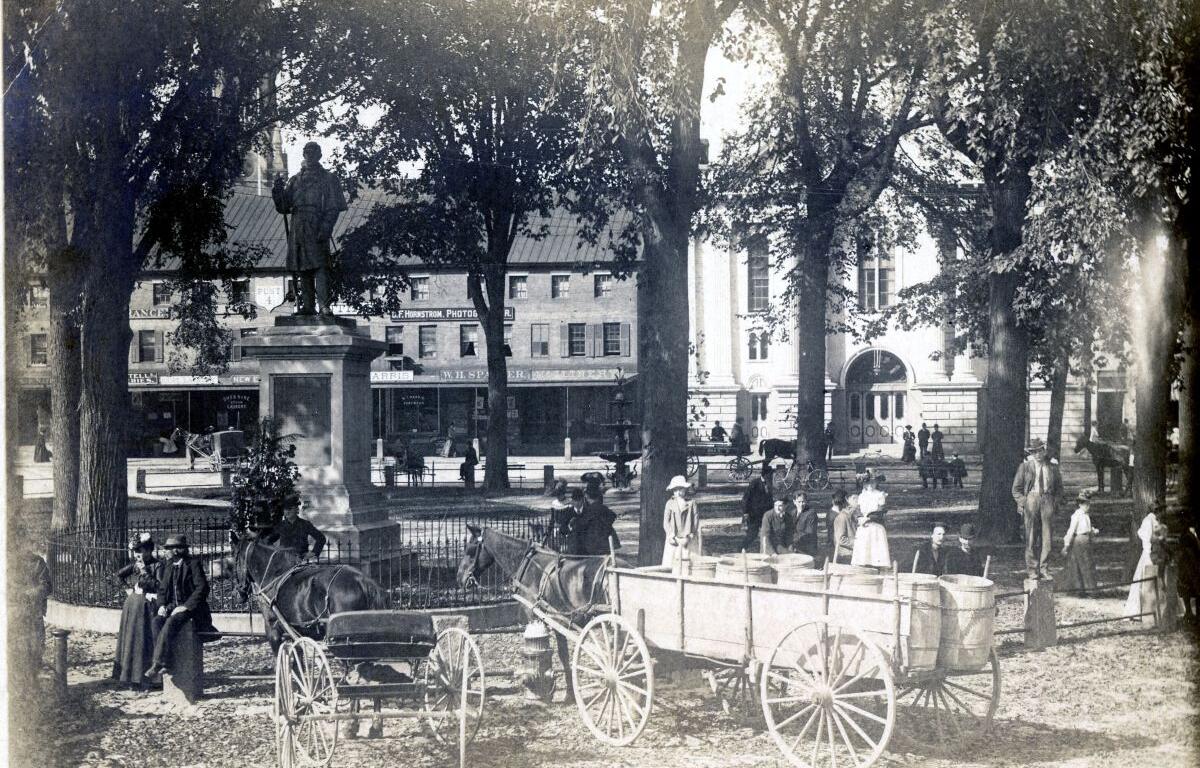
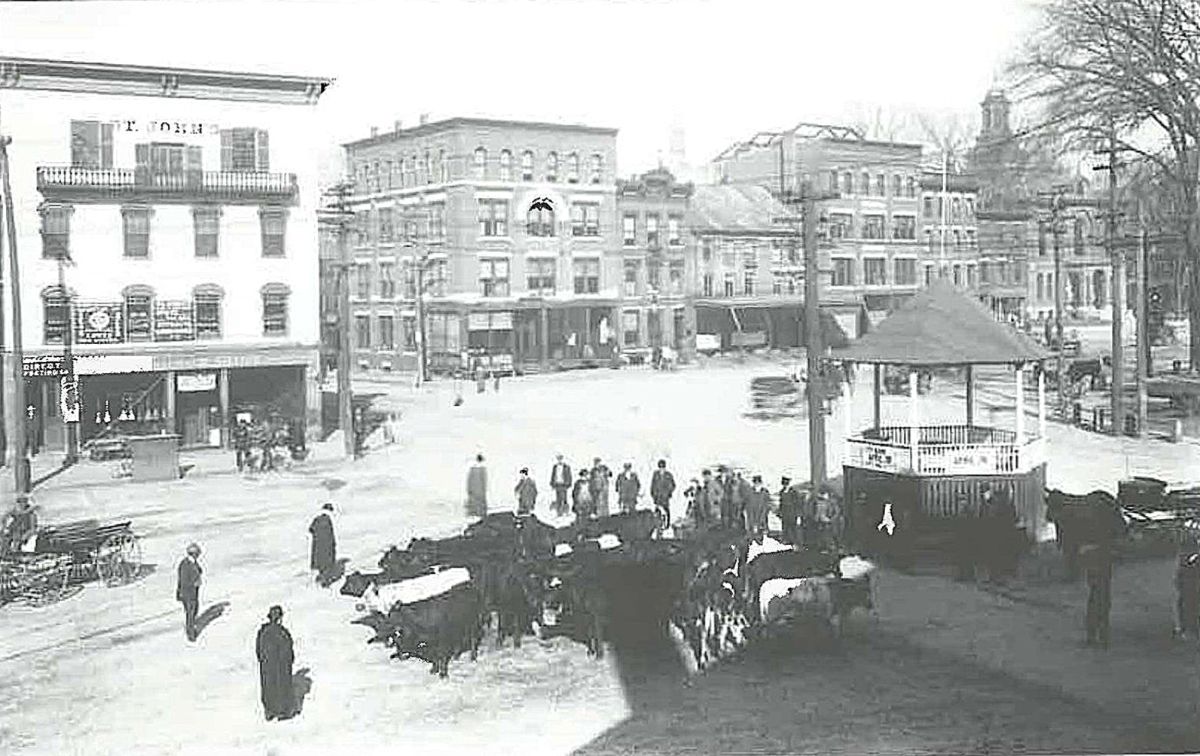
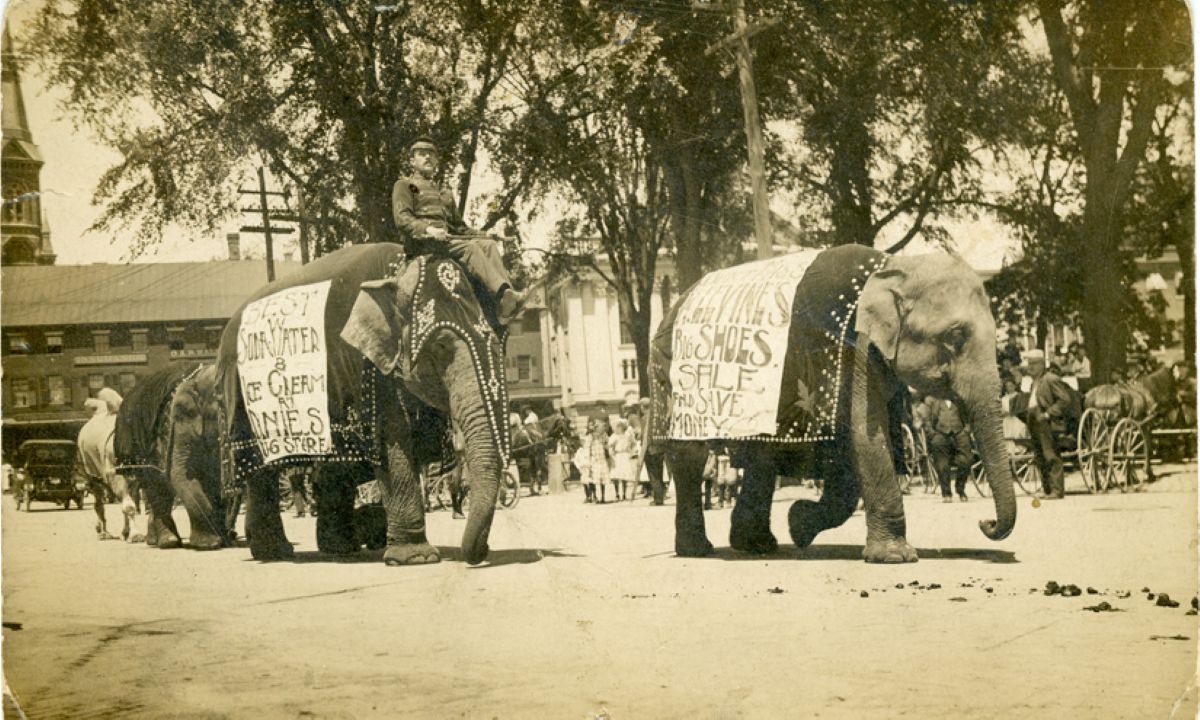
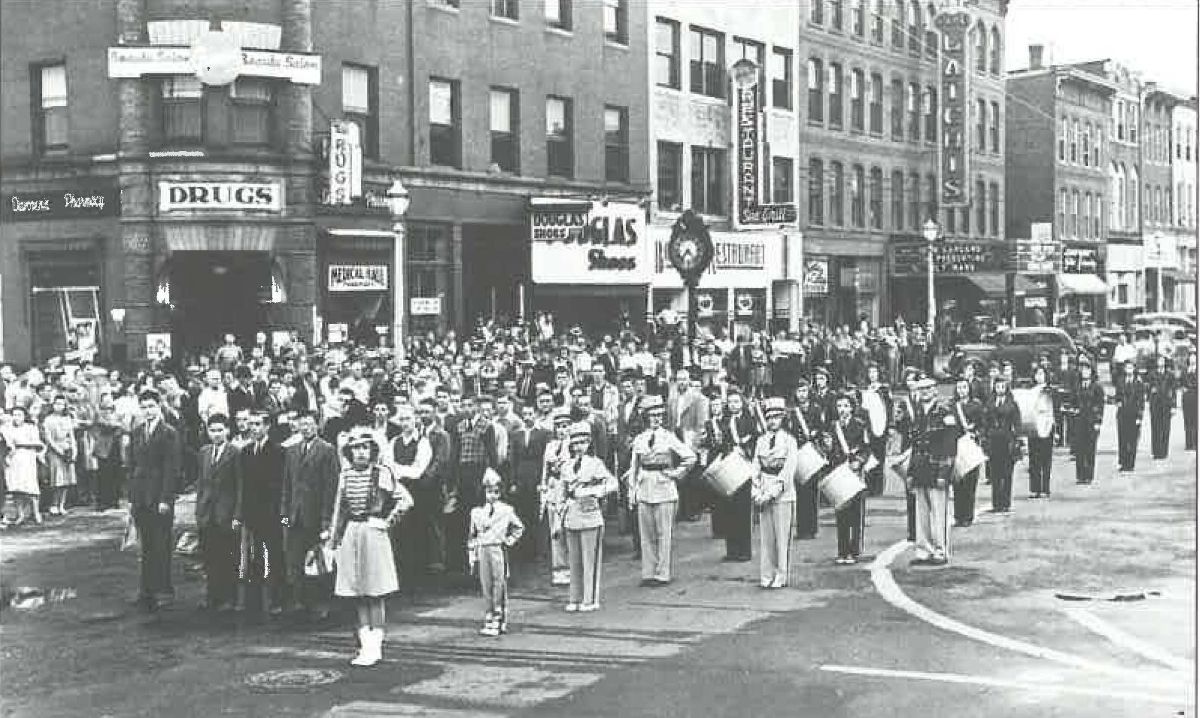
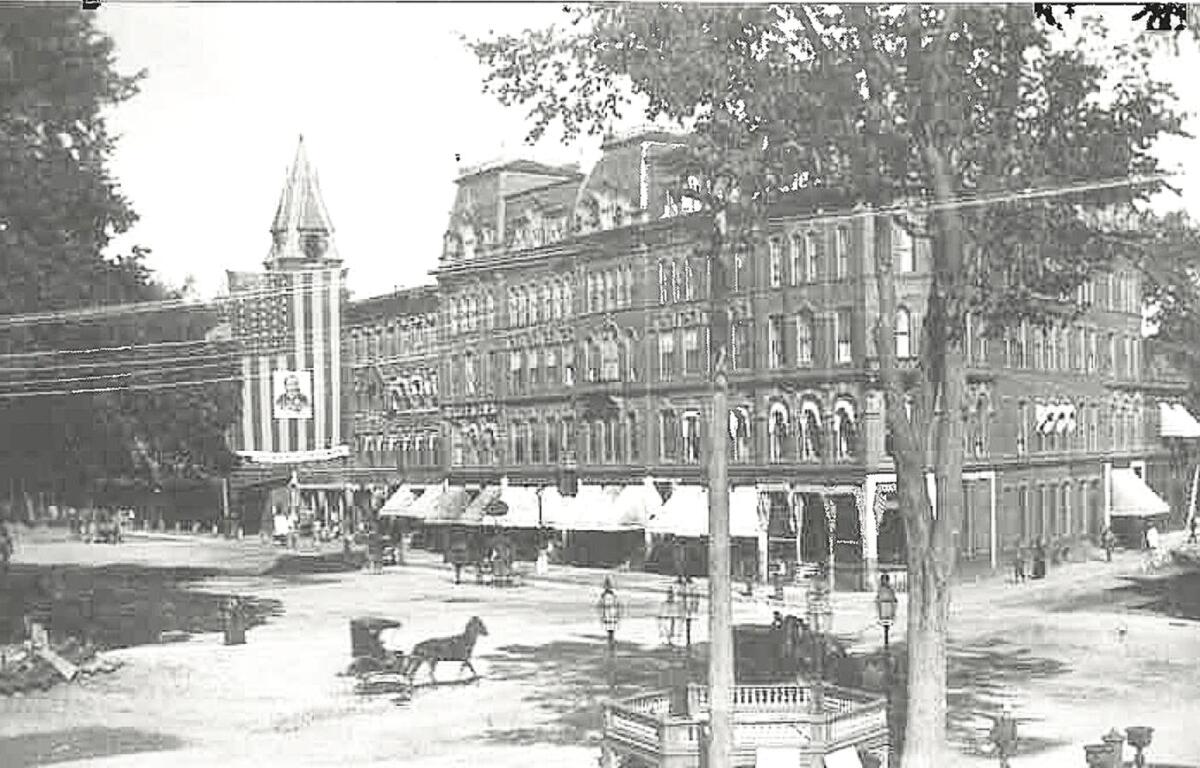
Sheep grazing in Central Square, 1910. Large numbers of sheep were pastured on the region’s abandoned hill farms. Their wool was sold to the many local textile mills. The Soldier’s Monument at Central Square in Keene; horse and carriages are in the foreground. Year Range: 1871-1899.Cheshire Beef Company cattle on Main Street, April 13, 1911. Cattle were still herded through the street, despite increased trolley and auto traffic. Being a transportation hub meant that herds of animals would still be driven through Keene well into the twentieth century on their way to distant markets.A postcard of elephants in a circus parade at Central Square.A group of World War II selectees, 1943.
The circus parade on Main Street circa 1900 in front of the Eagle Hotel.
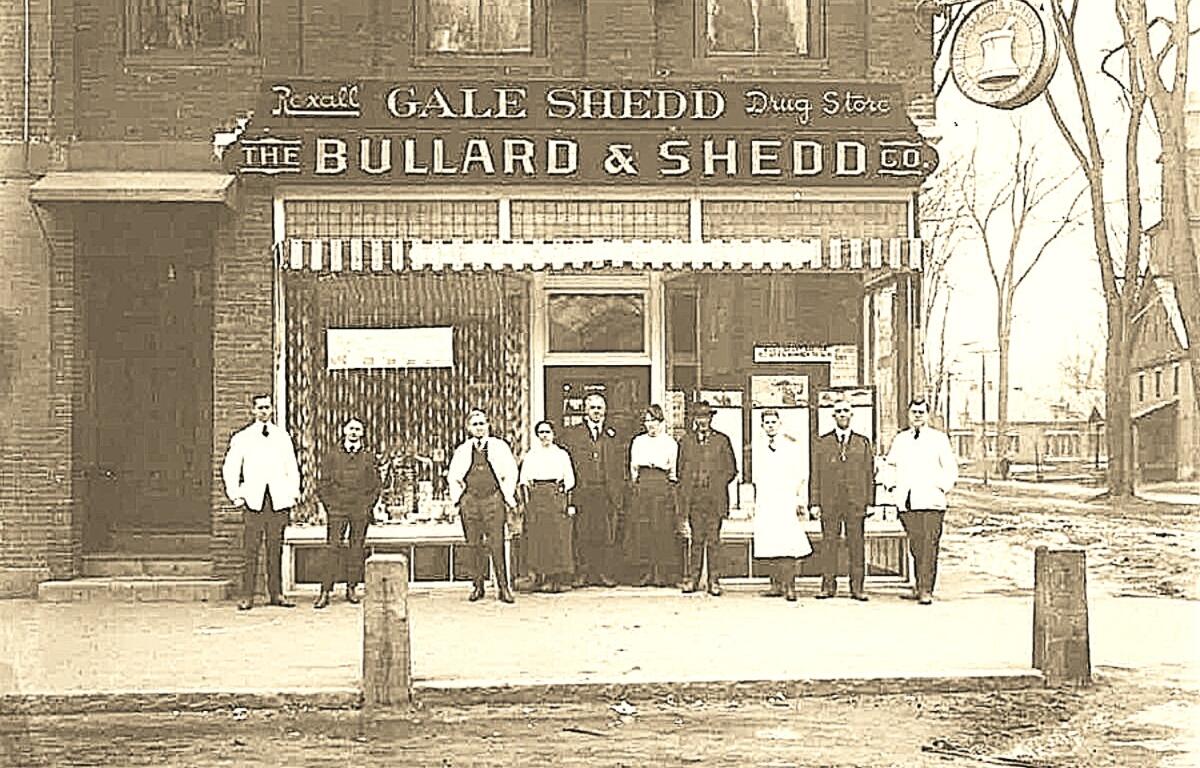
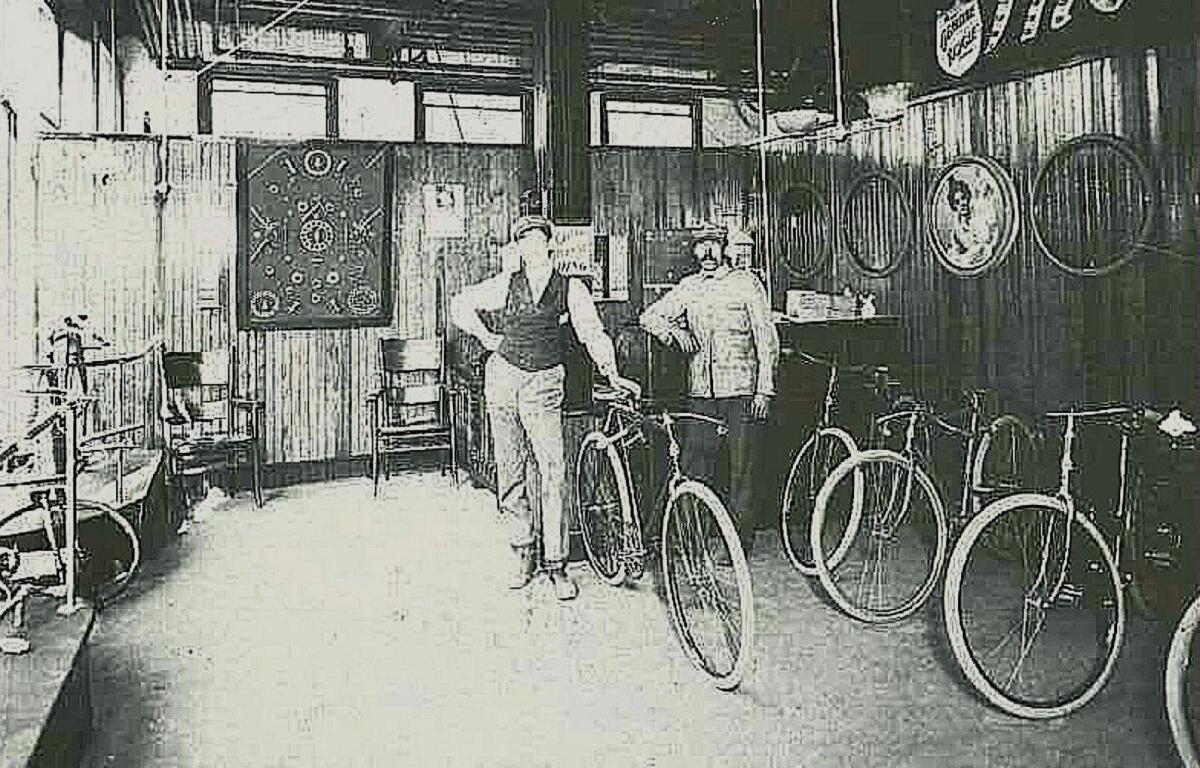
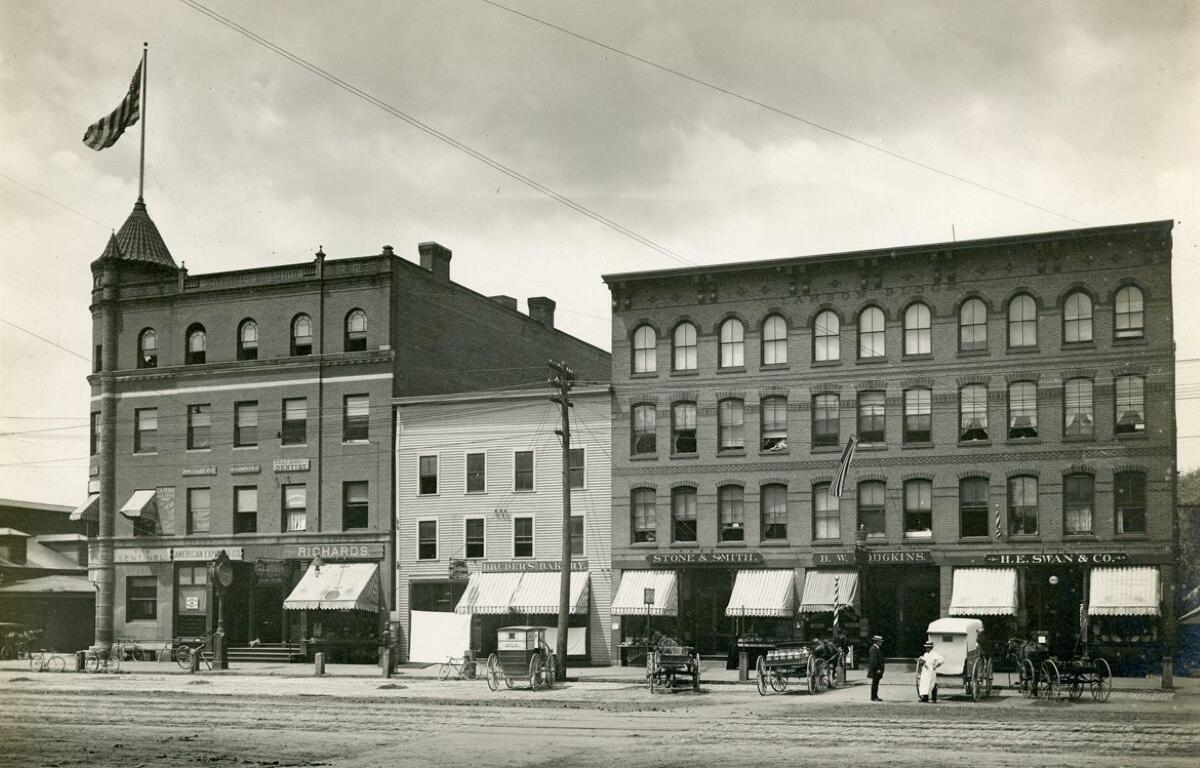
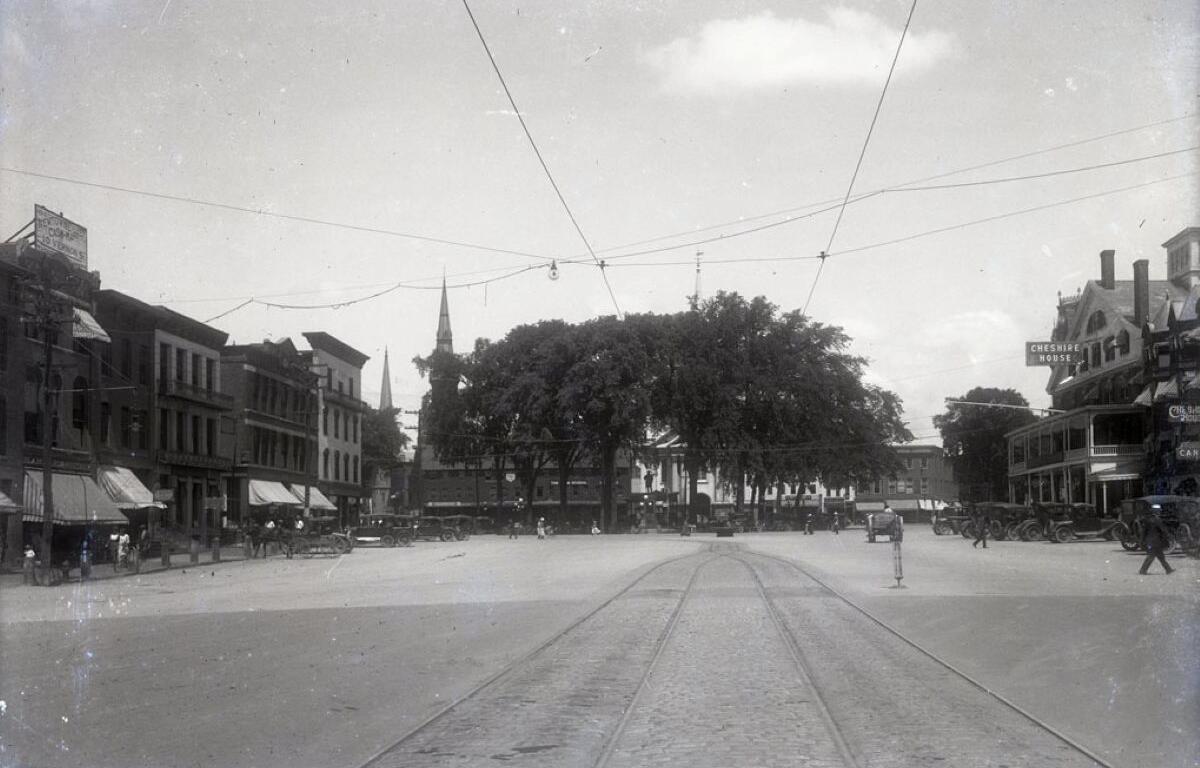
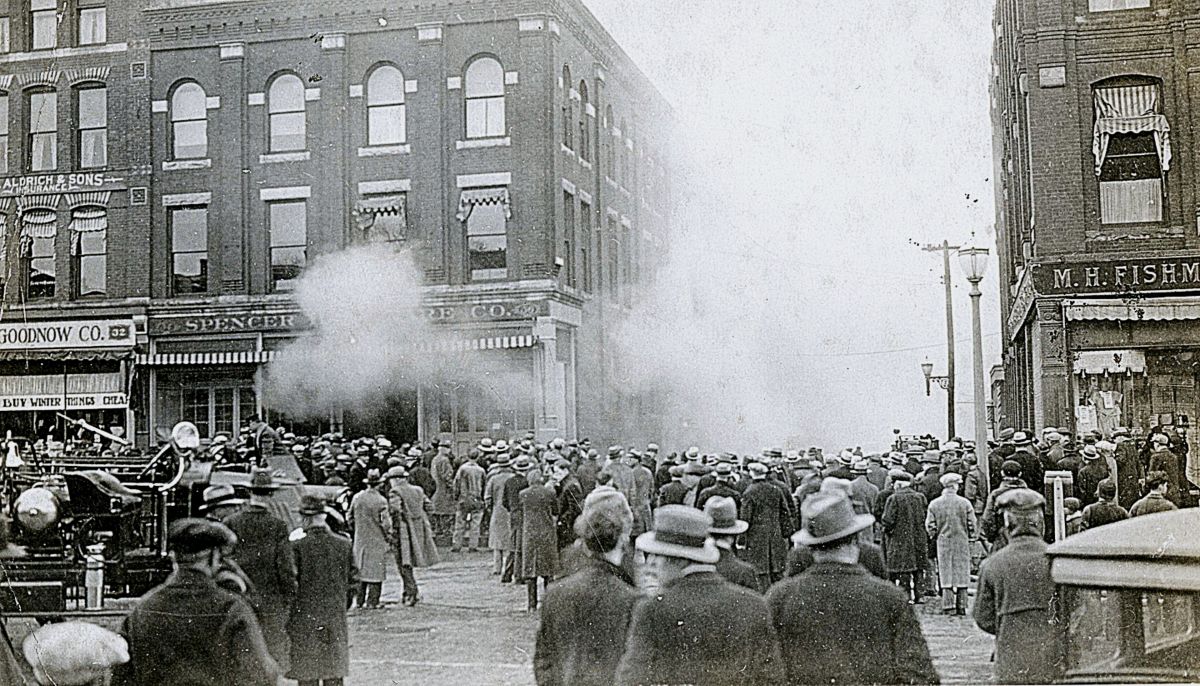
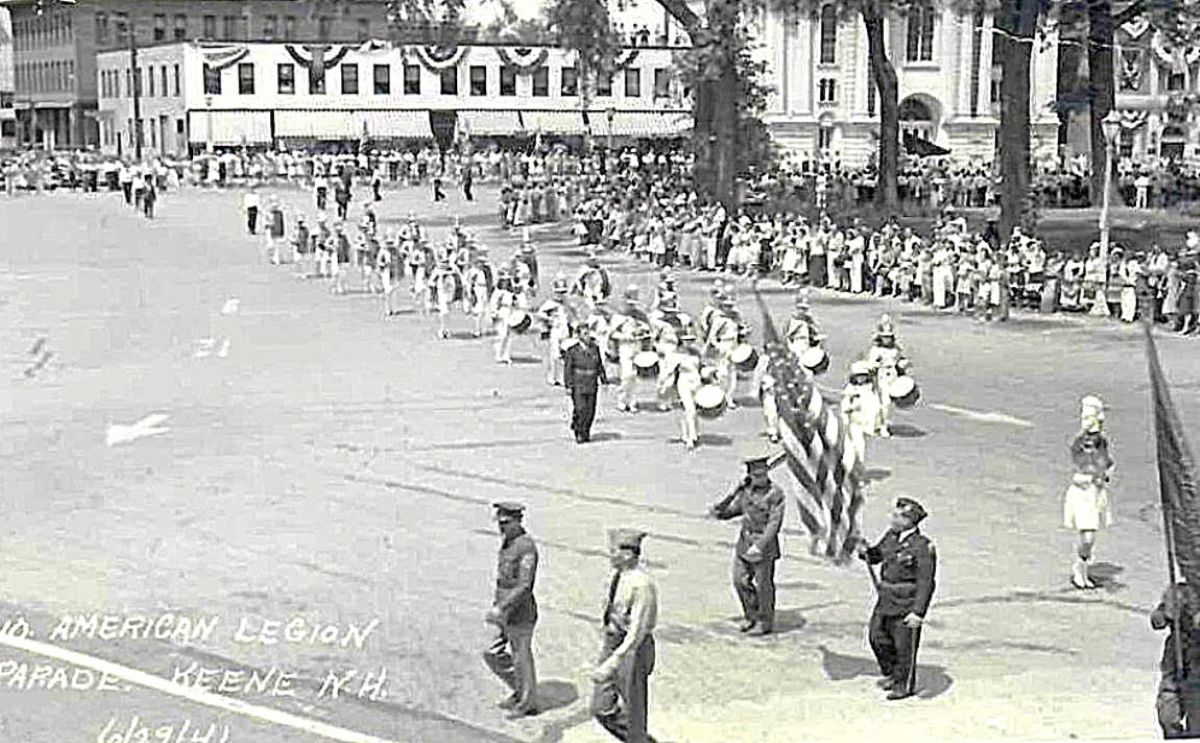
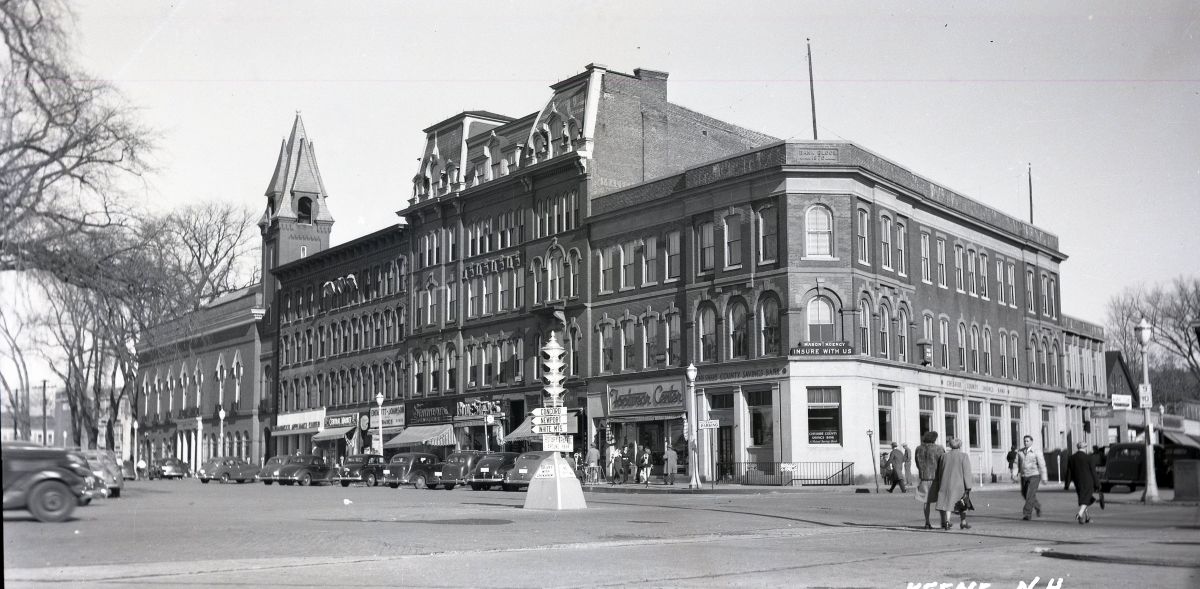
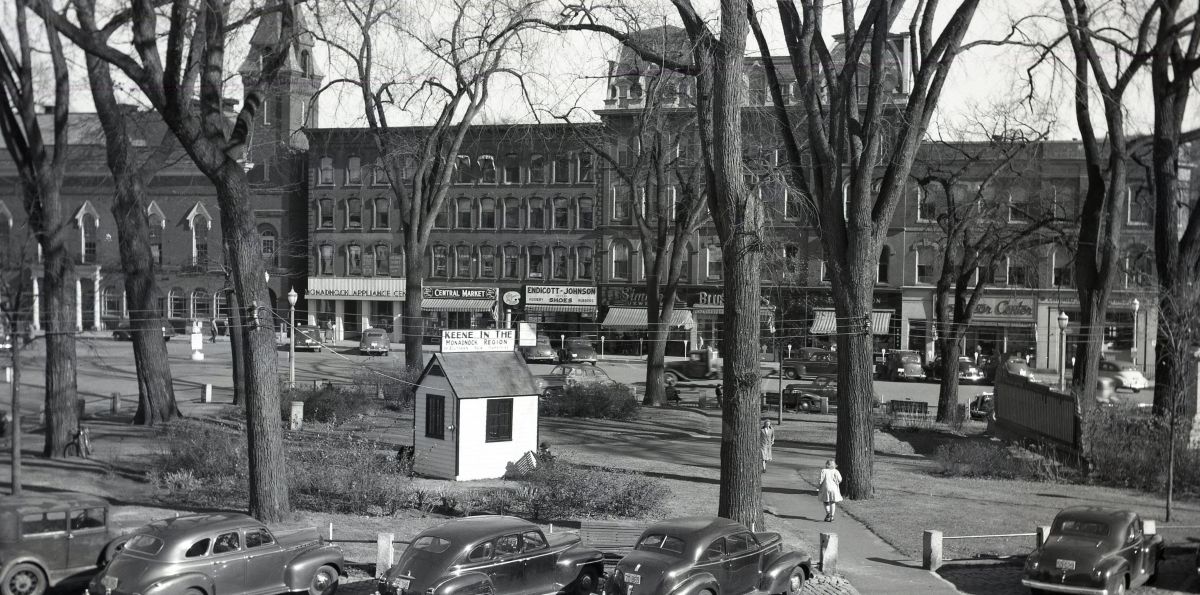
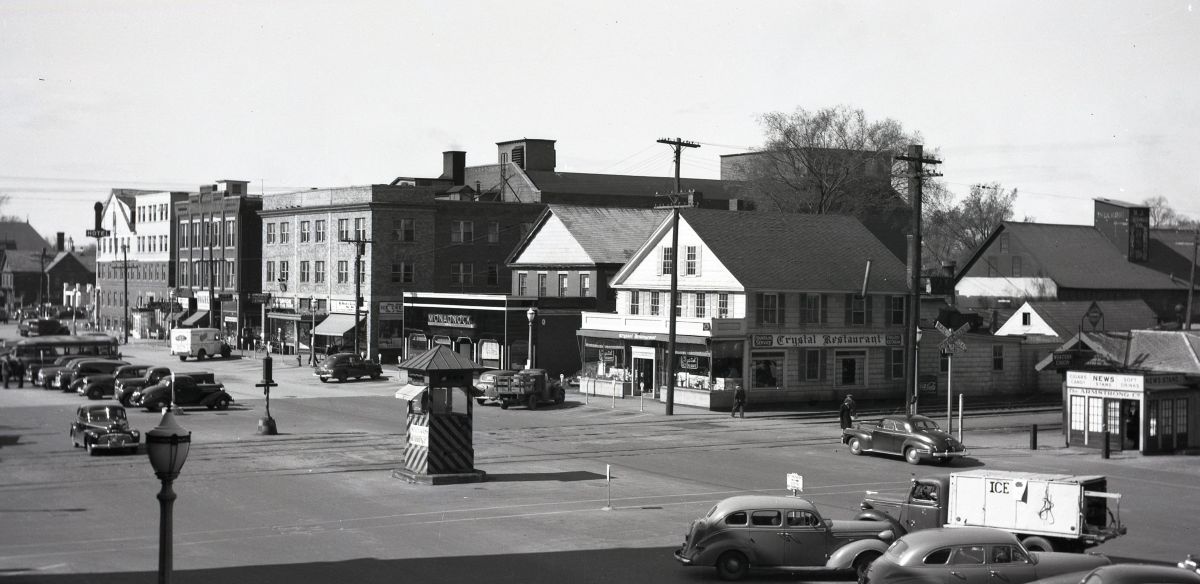
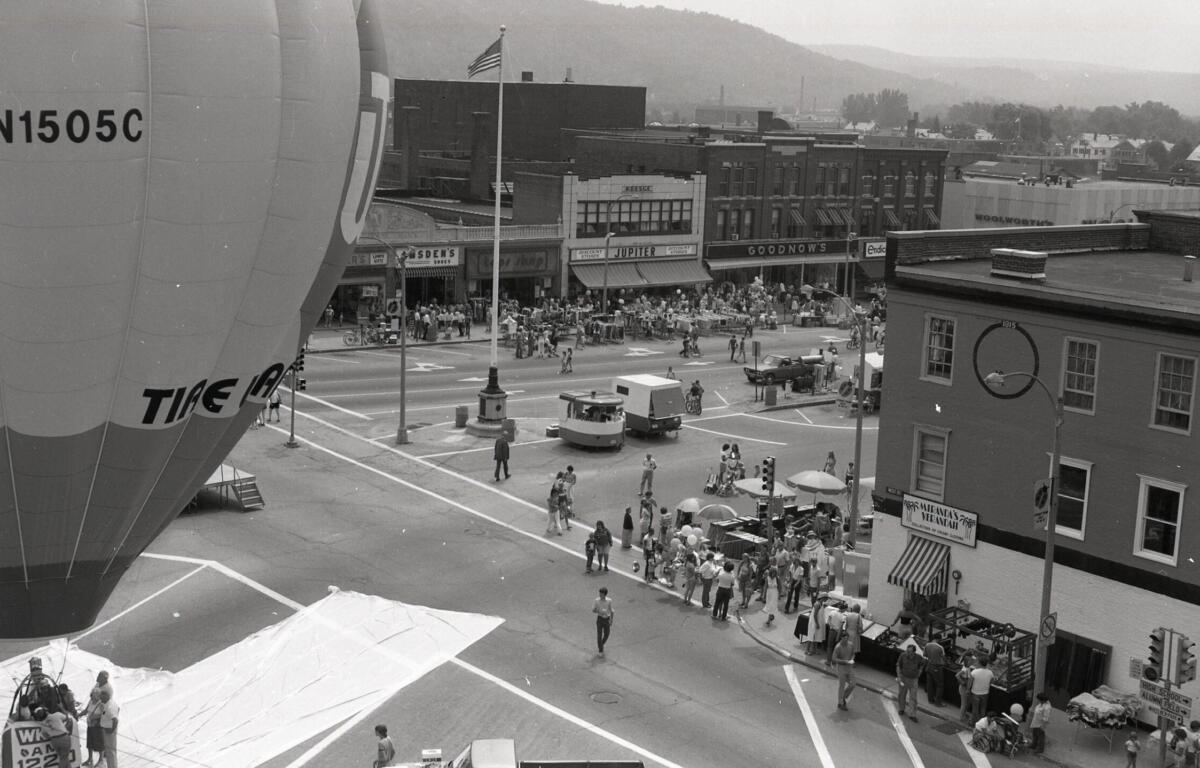
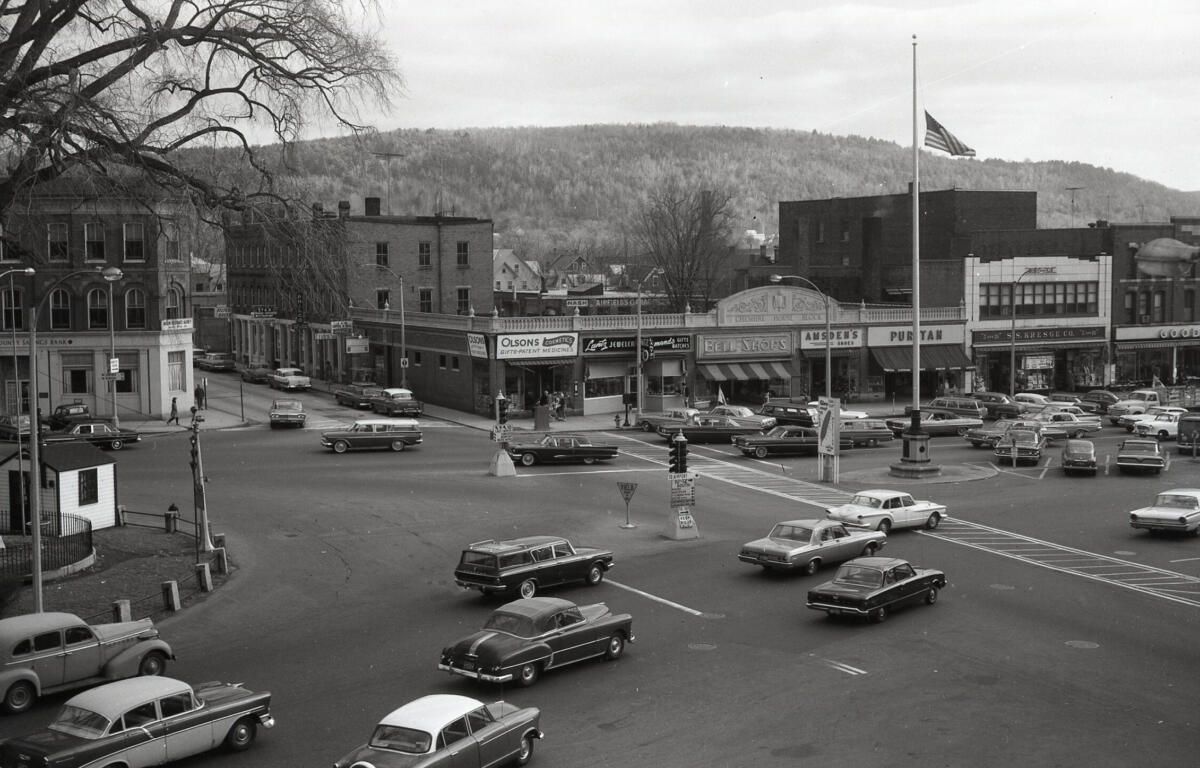
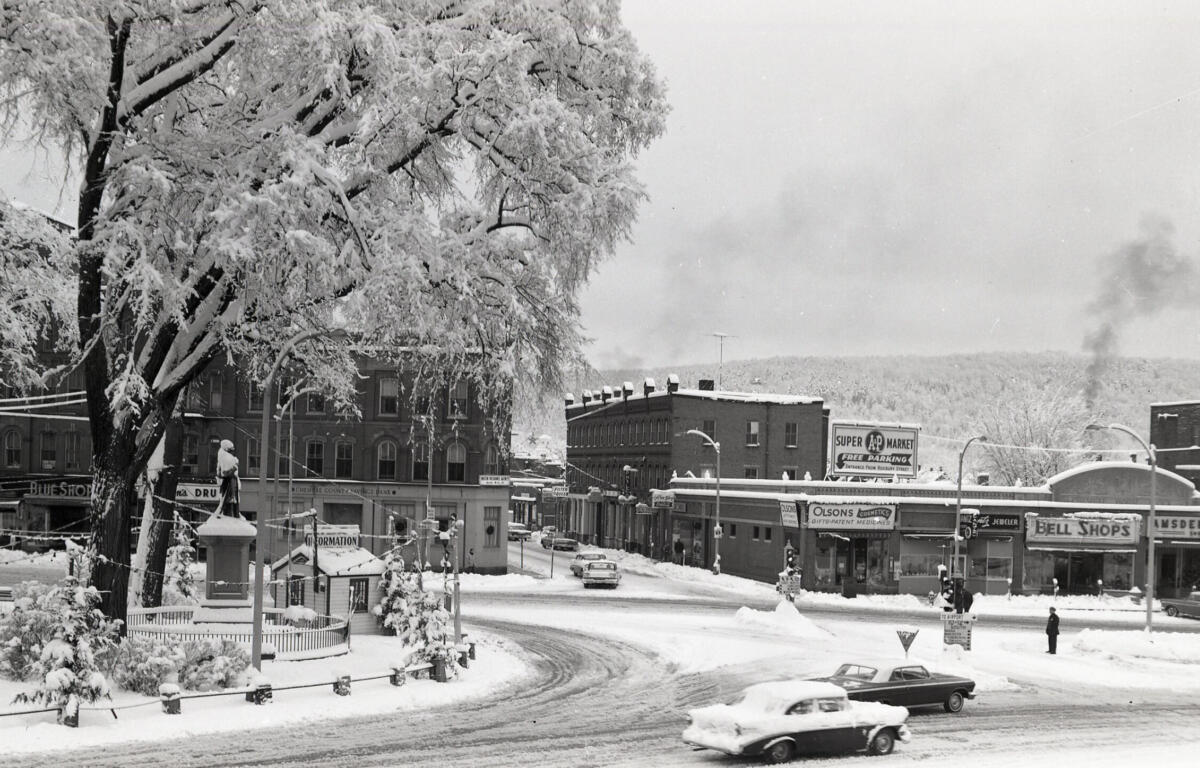
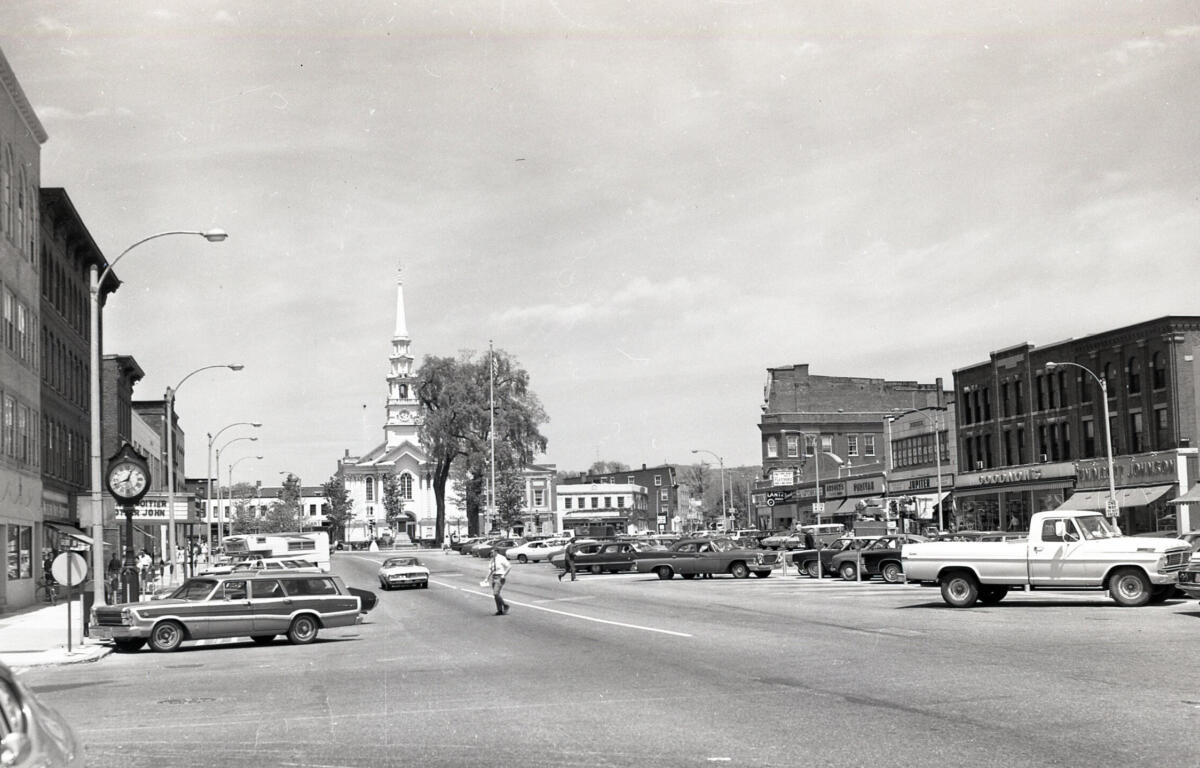
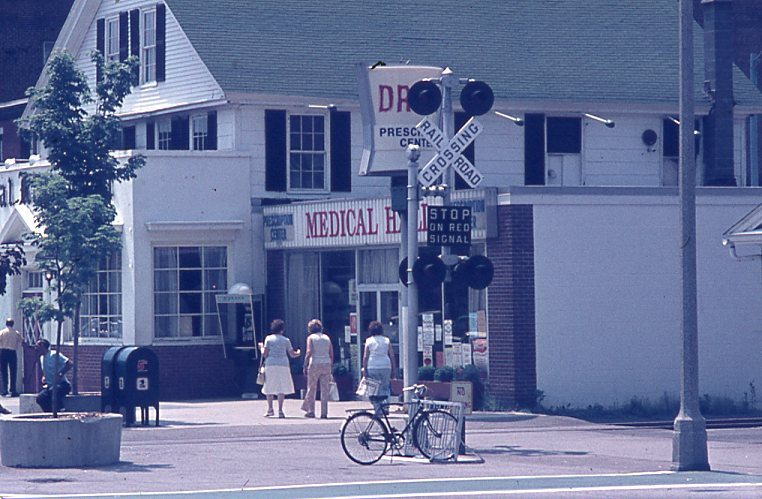
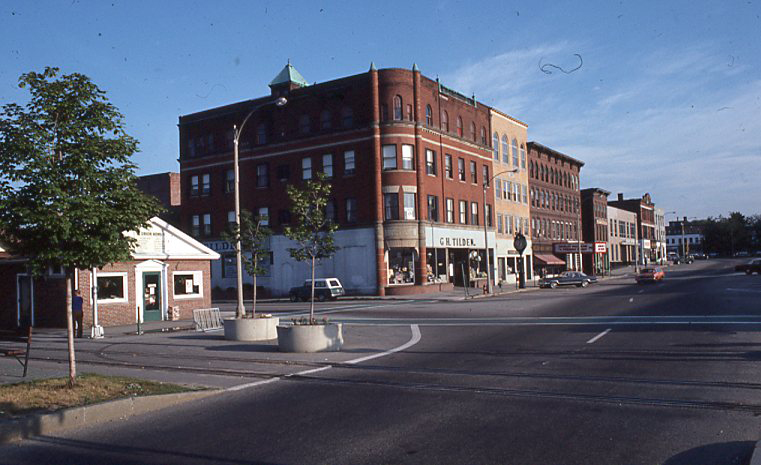
The east side of Central Square, 1888. The oldest drugstore in Keene, and one of the oldest in New Hampshire, Bullard and Shedd, which was at 37 Central Square. Trinity Cycle Manufacturing on Church Street circa 1897. The firm produced up to 60 bicycles a day and still could not keep up with orders from across the country.The Sentinel Block, Bruder’s Bakery, and the Lamson Block, Main Street.Central Square as seen along the trolley tracks from the railroad crossing on Main Street.Fire at Spencer Hardware Company, Main and Roxbury Streets.The American Legion Parade, June 29, 1941.A negative of the east side of Central Square including City Hall.A negative of an eastward view across the Common at Central Square. An information booth is seen in the foreground.: A negative of the west side of Main Street south of the railroad crossing. The newsstand, Crystal Restaurant and Ellis Hotel are seen.A negative of a balloon over Central Square in Keene during the annual street fair in the 70s or 80s. A negative of an overview of the eastern side of Main Street at Central Square.A negative of the east side of Main Street at Central Square in winter.: A negative of Main Street looking toward Central Square.A color slide of the railroad crossing on Main Street circa 1978. The Medical Hall and Crystal Restaurant are also seen. A color slide of G. H Tilden’s and the newsstand on the west side of Main Street at Gilbo Avenue. The railroad tracks are still present.
Historic text was provided by the Keene Heritage Commission. Unless otherwise noted, photos and caption information was provided by the Collection of the Historical Society of Cheshire County.


 Listen Live