


 Listen Live
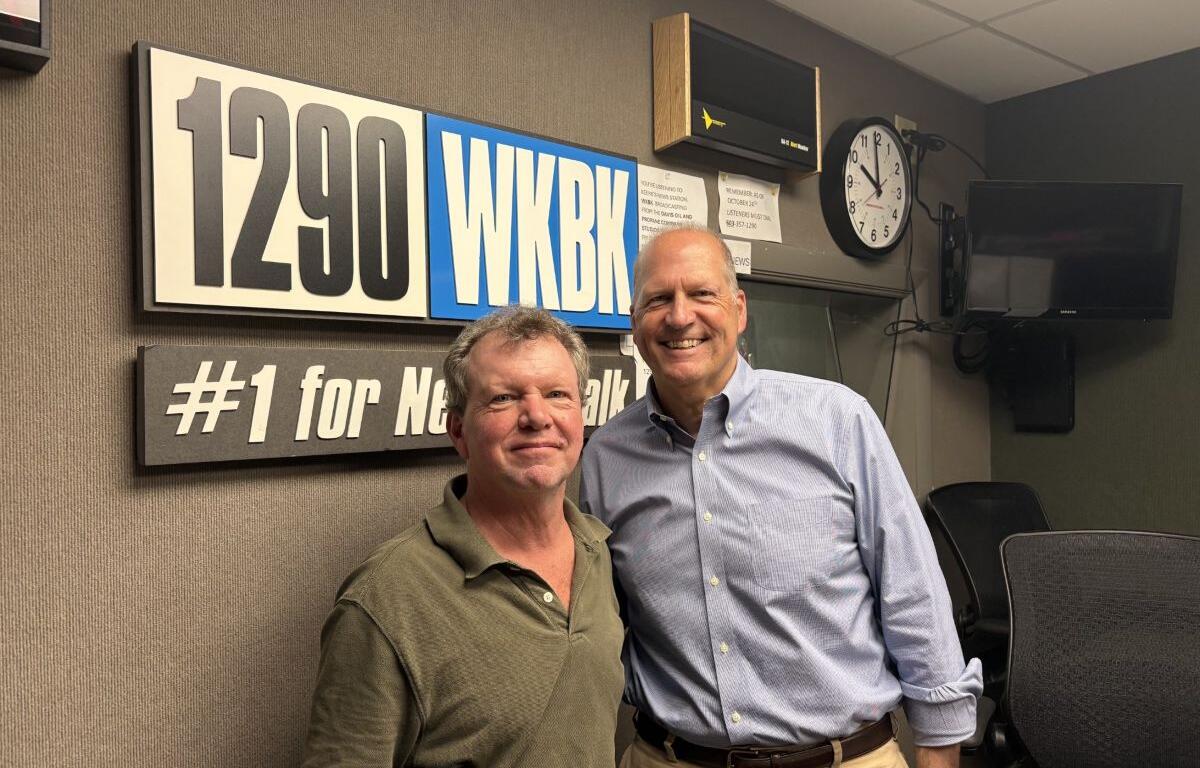

KEENE, N.H. (MyKeeneNow) Former U.S. Sen. John E. Sununu used a Monday appearance on WKBK’s Good Morning with Dan Mitchell to lay out his case for returning to the Senate, focusing on affordability, healthcare, housing, energy, federal spending and what he described as a need to restore congressional authority.
Sununu, a Republican seeking his party’s nomination for the U.S. Senate, spoke with host Dan Mitchell during an in-studio interview that covered both his campaign and a wide range of national and New Hampshire-specific issues. The full interview audio is embedded below.
Sununu said his decision to seek another term in Washington is less about returning to politics and more about representing New Hampshire. He pointed to nearly 18 years in the private sector since leaving the Senate, including work in technology and manufacturing, his involvement with Waterville Valley and teaching at St. Anselm College.
He also said being out of office for nearly two decades has changed his perspective on politics.
“I don’t have to worry about re-election. I’m not running for any other office. I don’t have to make anyone in Washington happy,” Sununu said. “My job, my focus will be standing up for the people of New Hampshire every single day.”
Affordability at the Center of His Campaign
Sununu repeatedly returned to affordability, arguing that the cost of living remains one of the biggest challenges facing New Hampshire residents.
He cited increases in consumer prices during the Biden administration and said wages need to grow faster than inflation for families to regain lost purchasing power.
Sununu also identified the federal government’s roughly $40 trillion debt as a major economic threat. He said reducing the deficit would require controlling the growth of federal spending rather than attempting to solve the problem through a single sweeping measure.
“If you want to talk about big economic problems we have to tackle, we have a $40 trillion debt,” Sununu said. “Let’s start there.”
He compared the challenge to eating an elephant — something that has to be accomplished “one bite at a time.”
Sununu also defended additional defense spending, particularly investments benefiting the Portsmouth Naval Shipyard, while criticizing what he characterized as insufficient support for national defense among some Democrats.
Healthcare Reform and Rural Access
Healthcare was another major portion of the interview.
Sununu argued that the current system is too expensive and overly complicated, calling for greater competition among insurers, expanded health savings accounts and mandatory price transparency from hospitals, clinics and doctors.
He also criticized the amount of time physicians and nurses spend dealing with federal regulations.
For rural New Hampshire, Sununu said federal funding should be paired with a coordinated five-year plan involving the governor, Legislature and healthcare providers around the state.
He specifically cited the need to preserve access to maternity care and other services in communities outside the state’s largest population centers.
Sununu also discussed elder care, saying more attention needs to be given to the burden placed on families caring for aging relatives.
Housing Costs and Canadian Trade
The Senate candidate connected housing affordability to federal trade and energy policies.
Sununu said he opposes tariffs on construction materials such as lumber, sheetrock and cement, arguing that higher material costs ultimately make housing more expensive.
He also said New Hampshire should not be caught in a trade dispute with Canada, given the state’s economic relationship with its northern neighbor.
On energy infrastructure, Sununu called for expanded electric transmission and natural gas pipelines, along with changes to the federal permitting process.
He said major infrastructure projects should receive a timely yes-or-no decision rather than spending years navigating regulatory delays.
Bringing The “New Hampshire Way” to Washington
Asked about the concept of bringing the “New Hampshire way” to Washington, Sununu pointed to several characteristics he believes distinguish the state: relatively low taxes, local control, individual responsibility and a willingness to live within one’s means.
He argued that neither Concord nor Washington necessarily knows what is best for every community.
That philosophy also shaped his position on federal housing programs. Sununu said Washington should continue providing resources but give New Hampshire greater flexibility in deciding how to use programs such as HOME, Community Development Block Grants and low-income housing tax credits.
Social Security and Congressional Power
Sununu pledged to protect existing Social Security benefits, noting that during his previous 12 years in Congress he said he never voted to reduce benefits or restrict the guaranteed minimum benefit.
He declined to endorse a single Republican blueprint for fixing Social Security’s long-term finances, instead arguing that a lasting solution will require bipartisan negotiations.
The interview also turned to the balance of power between Congress and the White House.
Sununu said Congress has gradually transferred too much authority to the executive branch, particularly over spending, tariffs and military action.
He argued that lawmakers should reclaim their constitutional authority over the federal purse and narrow the president’s ability to impose tariffs without congressional approval.
Foreign Policy and National Security
On foreign affairs, Sununu described Russia as a “true adversary” and said he supports continued assistance to Ukraine.
He also pointed to previous work with Sen. Lindsey Graham and Sen. Jeanne Shaheen on legislation involving secondary sanctions against countries and companies doing business with Russia.
Regarding Iran, Sununu said the immediate priority should include reopening the Strait of Hormuz to normal commercial traffic while continuing efforts to prevent Iran from obtaining a nuclear weapon and weakening its ballistic missile and terrorist-financing capabilities.
Energy, Climate and Artificial Intelligence
Sununu advocated what he described as an “even-handed” energy policy that includes renewable sources such as wind, solar and hydroelectric power while expanding nuclear generation.
He cited the safety record of Seabrook Station and said emerging small modular reactors could provide another option for industrial and rural communities.
He also called for greater regulatory certainty, arguing that businesses are better served by predictable rules than by rapidly changing climate and environmental requirements.
On artificial intelligence and data centers, Sununu said decisions about the local impacts of large data centers should primarily involve New Hampshire’s governor, Legislature and municipalities, particularly when roads, electricity and water infrastructure are affected.
He said the federal government does have a role in AI, particularly in protecting children and older adults from exploitation and fraud, addressing national security threats and studying the technology’s impact on jobs.
ICE Activity and Transparency
Mitchell also asked Sununu about concerns surrounding federal immigration enforcement, including ICE activity in Keene and questions about masked federal agents.
Sununu said body cameras should be standard for federal immigration officers as a way to improve transparency and public confidence.
He also emphasized cooperation between federal and local law enforcement and said ICE enforcement should prioritize people who are in the country illegally and have committed crimes or pose threats to public safety.
Sununu Draws Contrast with Scott Brown
Sununu is competing against former U.S. Sen. Scott Brown in the Republican primary scheduled for Sept. 8.
Asked what separates him from Brown, Sununu emphasized his engineering and small-business background, saying those experiences give him a different approach to technically complicated policy questions involving energy, transportation and the environment.
He also pointed to legislation he worked on during his previous congressional career, including measures involving internet taxation, the White Mountain National Forest and civil liberties protections.
Sununu said his private-sector experience and time away from elected office have left him focused on solving problems rather than building a political career.
“When I say that will be my focus, I’ve walked the walk,” Sununu said.
Listen to the full interview: