


 Listen Live
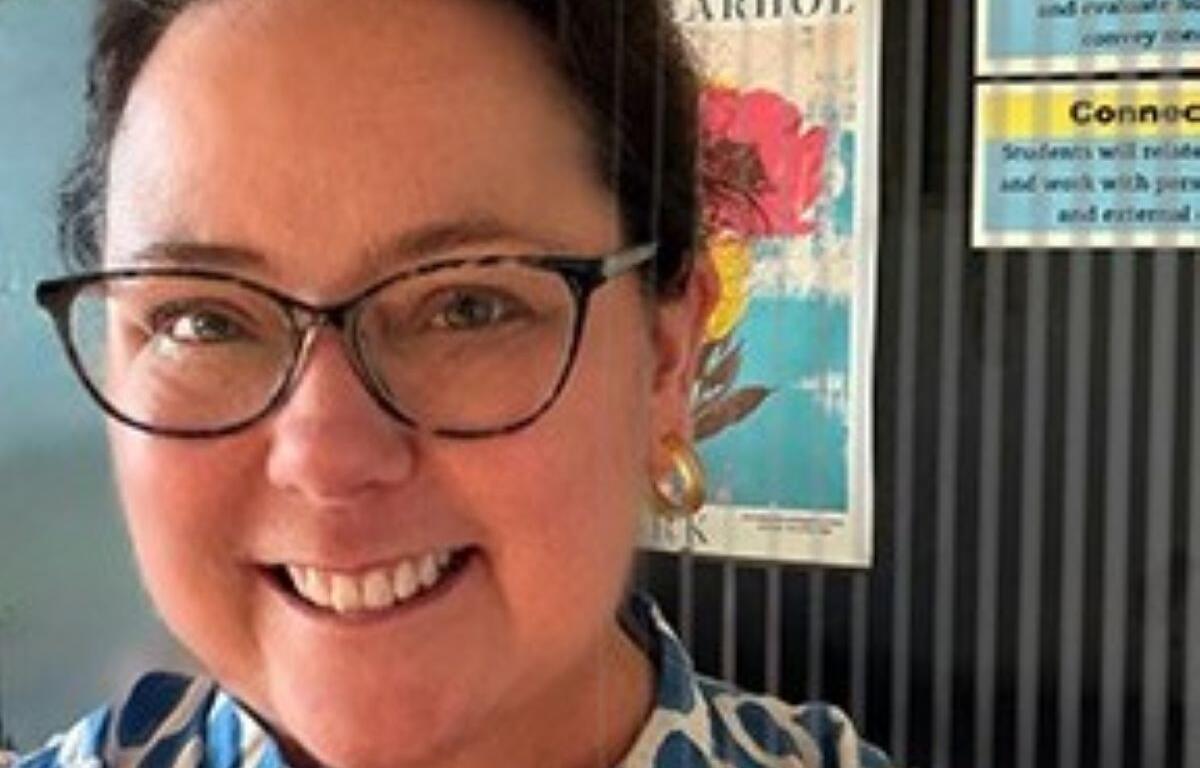

KEENE, N.H. (MyKeeneNow) For Shannon Perry, art has never fit neatly into a single category.
The Keene-based artist moves comfortably between photography, digital media, drawing, printmaking and painting, often allowing one medium to influence the next. After more than nearly 30 years as a public high school K-12 art educator in New Hampshire, Perry is now working to make fine art a larger part of her professional life while continuing to explore how creativity can help people better understand themselves and the world around them.
Perry, who works professionally under the name SHANN, describes herself as a multidisciplinary artist whose work explores contemporary issues through overlapping media and methods. She holds a bachelor’s in industrial design with a concentration in photography from Carnegie Mellon University and is now pursuing an master’s in studio art through the Maryland Institute College of Art of Design in Baltimore. She is expected to complete the low-residency program in 2028.
The graduate program has become an important catalyst for Perry, both artistically and personally.
“My BFA is in design, and so I was never traditionally trained in fine art,” Perry said. “I felt that obtaining an MFA would be helpful for me when growing my professional artist practice.”
The low-residency format has allowed Perry to continue teaching while developing her studio practice and connecting with artists from around the world. She said the relationships she has formed through the program have been among its most meaningful aspects.
“I didn’t even realize how just life-changing these experiences have become for me in the last two years,” she said. “The relationships with the people that I’ve met—it’s immeasurable.”
Perry said the people in her cohort have provided not only encouragement but also a professional network and a sense of community that can be difficult to find while working independently as an artist.
At the same time, her own practice is expanding rapidly.
“The amount of work I’m creating at a time is much greater,” Perry said. “My reach and how I want to show—I’m working to grow that—really all aspects. I’m continually reflecting on my vision and what I want my work to express.”
She is actively showing her work, accepting commissions, developing products featuring her artwork and exploring opportunities for gallery representation.
From Camera to Canvas
Photography remains an important entry point for Perry’s creative process.
She often begins with photographs, manipulating them digitally through Photoshop and other applications. Those altered images can then become the foundation for drawings, painting, printmaking and collage. Rather than treating media as separate disciplines, she allows them to overlap and inform one another, developing into mixed media creations.
That approach also gives Perry room to investigate ideas that extend beyond the literal image.
One of her newest bodies of work grew out of an emotionally difficult return to Idaho following the death of her nephew last November. Perry had not returned to the state since she was 9 years old.
The trip brought her face-to-face with places and objects connected to her childhood and memories of abuse, abandonment and trauma. She photographed locations, collected objects, and documented details that had remained remarkably unchanged over the decades.
For Perry, seeing those places again provided a form of validation for memories she had sometimes questioned.
But she does not want her artwork to simply tell her own story.
“I want to create images that resonate with people,” she said.
Her goal is to leave enough space for viewers to bring their own experiences to the work.
“It opens up their ability to see it and think about it without me saying everything or about it being so personal to me,” she said.
That distinction is important to Perry. Her experiences may provide the starting point, but the finished work is intended to become something larger than an autobiography.
Looking at the Messages We Absorb
Perry’s work also increasingly examines the ways people are shaped by culture and media.
She has spent time reflecting on how television, advertising and other cultural influences affected her understanding of herself and the world when she was growing up. Those questions have led her to examine feminism, gender expectations and the ways people internalize messages about who they are supposed to be.
Perry said she once resisted describing herself as a feminist despite agreeing with many ideas associated with feminism.
“I would say, ‘Oh, I totally agree with that. I’m not a feminist, but…’” she recalled. “And probably in the last five years I’m like, ‘What the heck was wrong with me? Yes, you were!’”
She believes some of that resistance came from cultural messages that portrayed feminism negatively.
Her artwork gives her a way to examine those ideas rather than simply accepting them.
The result is work that can be personal without being confined to Perry’s biography. Her childhood experiences, her observations about media and culture, symbolic subject matter, and her evolving understanding of identity all become pieces of a larger conversation.
Nearly Three Decades in the Classroom
While Perry is increasingly focused on her own artwork, teaching remains central to who she is.
She has spent nearly three decades as a public high school art educator, including her work at Keene High School. Her classroom experience has also influenced the way she thinks about the role of art outside the traditional art world.
Perry has watched students use creative work to process difficult experiences, build confidence and find ways to express things they may not be able to put into words.
She said some of her teaching has increasingly taken on qualities of art therapy, although she does not present herself as a clinical art therapist.
“A lot of times, the students I have now don’t even realize the effect creating has on them, but it is beneficial to them, and I see the results, which is amazing,” she said.
That experience has helped shape her vision for what comes next.
Imagining A Different Kind of Art Space
Perry is considering a future transition away from full-time teaching, although she has not settled on when that might happen.
When she eventually makes that move, she does not envision simply spending her days alone in a studio.
Instead, she would like to create a gallery and teaching space where art and community could coexist.
The concept would provide a place where people could make art without the pressure of producing something for a grade, a competition or a sale. Perry imagines a comfortable environment where people could experiment, learn and perhaps discover something about themselves in the process.
“I actually would like to have a gallery,” she said, “but also not just a gallery, but a space where I can continue to teach on my own calendar.”
She is considering pursuing an art therapy certificate to complement her experience, while remaining clear that her envisioned space would not be a clinical practice.
For Perry, the value would be in creating an environment where people can slow down.
“It’s more just comfort in sitting and creating things without pressure,” she said. “That’s when you’re able to open up and learn things about yourself.”
The idea reflects the intersection of Perry’s different careers: artist, designer and educator.
A Practice Still in Progress
Perry’s path to this point has not been linear. For years, art existed alongside family responsibilities, teaching and other demands. The COVID-19 pandemic became a period of reassessment, giving her an opportunity to slow down and reconsider what she wanted to devote her time and energy to.
Now, with her MFA studies underway and her body of work growing, she is deliberately building a future in which art occupies a more central role.
There are still practical questions to answer, including when to retire from teaching, how to manage finances and insurance during a transition, and how to reclaim a dedicated studio space at home.
But Perry appears less interested in having every detail resolved than she is in moving forward.
“The perfect world is seeking that balance of a calm and understanding of myself, forgiveness,” she said.
That spirit of reflection is increasingly evident in her artwork.
For Perry, the work is not simply about producing more paintings, photographs or prints. It is about asking questions—about memory, identity, culture, forgiveness and the stories people tell themselves—and creating images that allow others to ask their own.
As her MFA studies continue and her professional art practice expands, Perry is building toward a future in which those questions can be explored not only through her own work, but potentially in a space where she can invite others to create alongside her.
For an artist whose work has always crossed boundaries between media, that next chapter may simply be another evolution of the same creative process: looking closely, making connections and seeing what emerges.