


 Listen Live
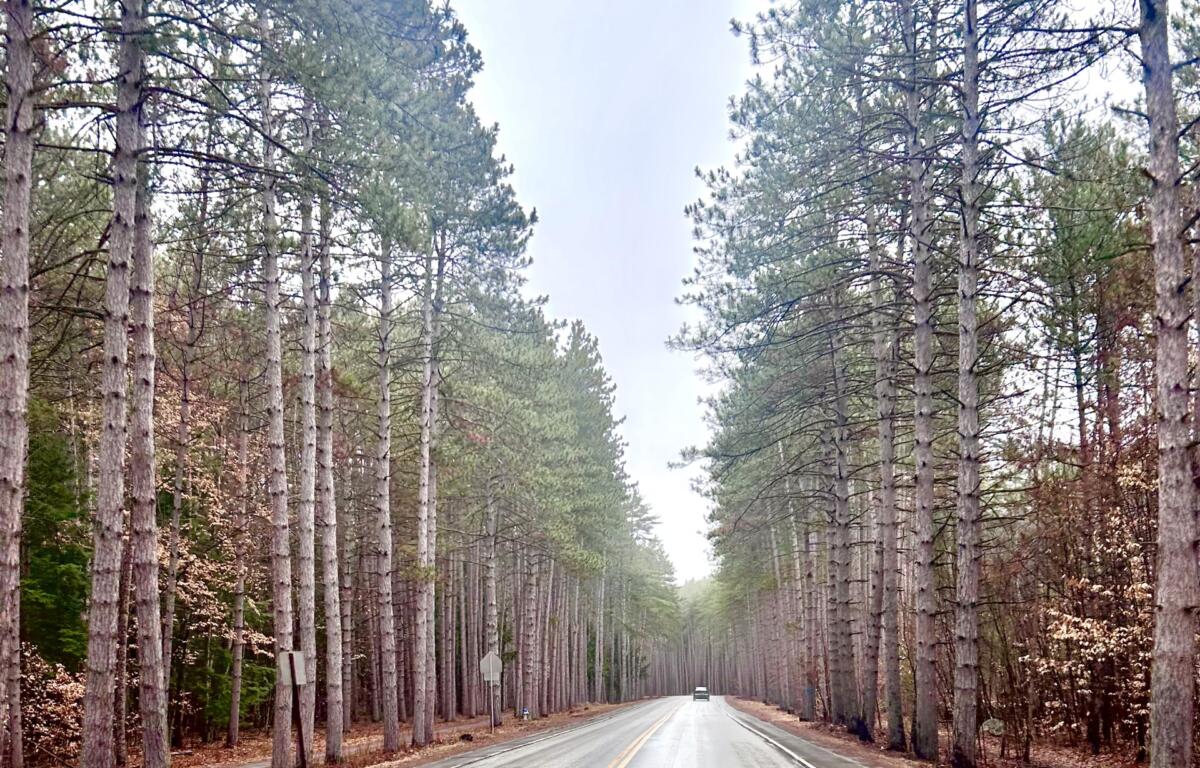

KEENE, N.H. (MyKeeneNow) As crews prepare to begin cutting hundreds of trees in Keene this week, a state forest health specialist says the work is both urgent and unavoidable.
Speaking Monday on Good Morning with Dan Mitchell on WKBK, Ryan Crandall of the New Hampshire Division of Forests and Lands outlined the scope and reasoning behind a major tree removal project tied to the spread of the red pine scale insect.
The work is set to begin April 20 in Dinsmore Woods along Maple Avenue, with additional activity expected in areas such as Wheelock Park and other city properties where red pine stands are concentrated.
Crandall said the invasive insect, which has been present in New Hampshire since about 2012, attacks red pine trees by feeding on their branches, leading to visible symptoms like browning needles and rapid decline. First detected near Keene in nearby Swanzey in 2024, the infestation has since spread into multiple local parks.
Unlike some other forest pests, Crandall said there are no practical treatment options.
“In this case, removal is really the only effective tool we have,” he said, explaining that chemical treatments and biological controls are either ineffective, too costly, or pose risks to other species.
The situation is worsened by the way many of Keene’s red pines were originally planted. Following the 1938 hurricane, large areas were reforested with dense, single-species stands — a practice known as monoculture. While efficient at the time, Crandall said those stands are especially vulnerable to pests.
“When you have large blocks of one species, it makes it much easier for something like this to spread and impact nearly every tree,” he said.
Many of those trees are now approaching 100 years old, near the end of their natural lifespan, particularly in crowded growing conditions.
The planned removal project will involve closing Maple Avenue for about a week while crews use heavy equipment to cut, process and haul the trees. The work is timed in part to coincide with school vacation week, reducing traffic impacts near nearby schools.
Crandall said acting now also allows the city to recover value from the harvested wood, which can be used for products such as lumber, telephone poles and mulch. Waiting too long would leave the trees too deteriorated to be usable, significantly increasing removal costs.
The project will be monitored for wildlife, he said, with state biologists involved in planning. If animals are encountered, rehabilitation options are available. While some disruption is expected, Crandall noted that the affected areas — largely monoculture stands near developed neighborhoods — may not support as much diverse wildlife as more natural forests.
Looking ahead, the cleared areas are expected to regenerate with a mix of native species. Rather than replanting another single-species stand, the goal is to encourage a more diverse forest that is better able to withstand future pests and environmental stressors.
“In the first couple of years, it’ll look like a lot of low growth,” Crandall said. “But within five to ten years, people will start to see a young forest coming back.”
The conversation also touched on broader forest health challenges in New Hampshire, including pests such as the emerald ash borer and hemlock woolly adelgid, as well as emerging threats like beech leaf disease. Crandall said some of these issues are being addressed through biological controls, while others remain difficult to manage.
Despite the challenges, he emphasized that proactive management — including projects like the one in Keene — can help create more resilient forests over time.
Listen to the full audio: